News
Flat Roof Repair: Causes, Fixes & When to Replace
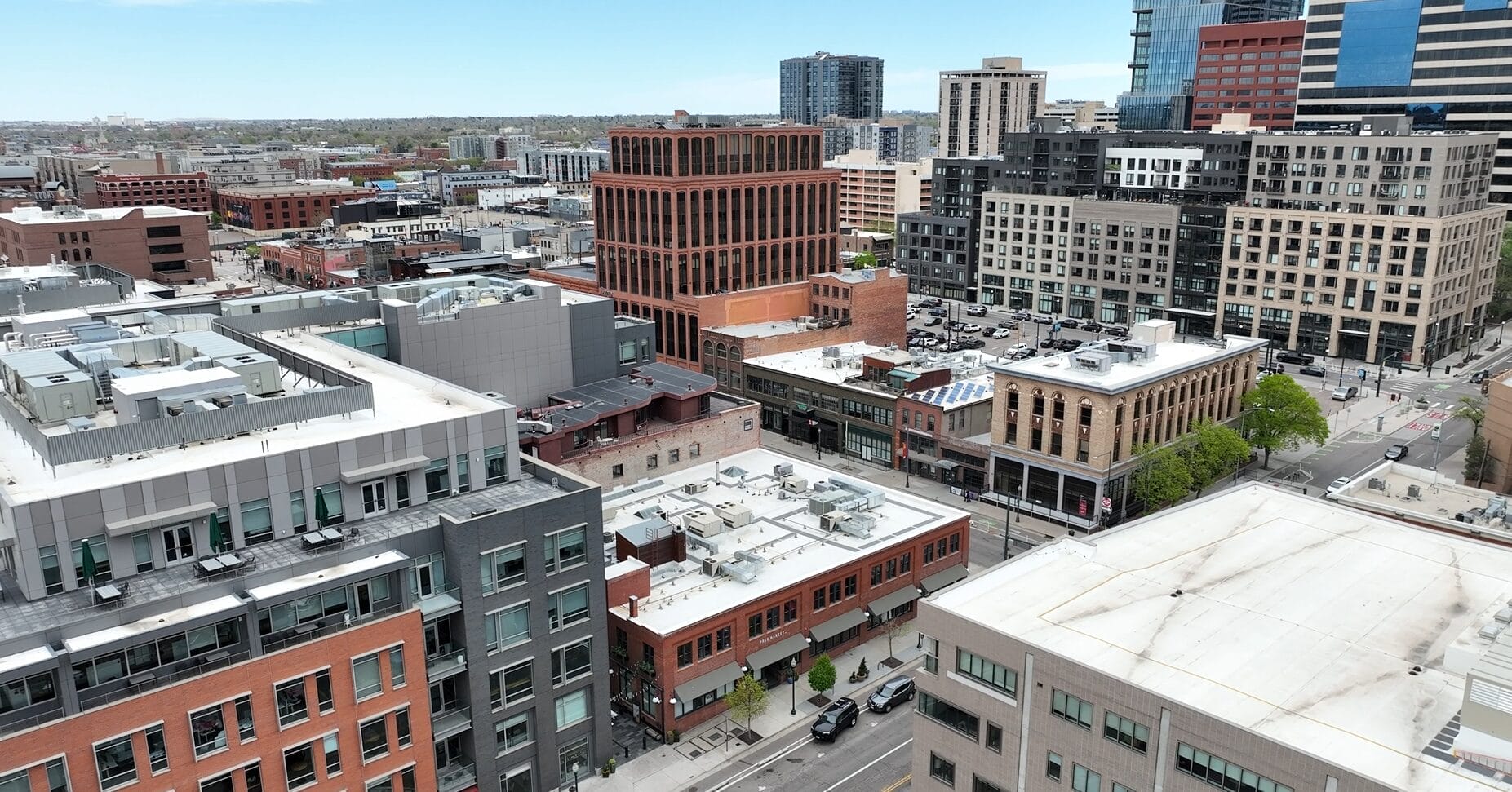
Flat roofs are practical, cost-effective, and common on commercial buildings, multi-family properties, and residential additions across Colorado. They’re also unforgiving when something goes wrong. Unlike a steep-slope roof where water runs off quickly by gravity, a flat or low-slope roof relies entirely on its membrane and drainage system to keep water out. When either fails, the consequences tend to show up fast and get expensive quickly if left unaddressed.
The good news is that most flat roof problems are fixable when caught early. The challenge is knowing which problems are repair territory, which ones signal a system that’s reaching the end of its useful life, and how to tell the difference before you’ve spent money on the wrong solution.
This guide covers the most common causes of flat roof failure, how repairs work across the main membrane types, and a clear framework for deciding when repair makes sense versus when replacement is the smarter investment.
Why Flat Roofs Fail: The Most Common Causes
Understanding what causes flat roof problems is the first step toward addressing them correctly. Most failures trace back to one of the following.
Ponding Water
Water that sits on a flat roof for more than 48 hours after rainfall is one of the leading drivers of premature membrane failure. Flat and low-slope roofs are designed to drain, but when drains clog, slope is inadequate, or the roof deck has deflected over time, water pools rather than moves.
Ponding accelerates UV degradation of the membrane, adds structural load to the roof deck, and creates sustained pressure at seams and flashing details that eventually finds a way through. In Colorado, ponding also contributes to freeze-thaw damage in winter when standing water becomes standing ice.
Membrane Punctures and Tears
The roofing membrane is the waterproofing layer between the elements and everything below it. Once it’s breached, water has a path in. Punctures can come from foot traffic, dropped tools during rooftop HVAC or electrical work, windblown debris, hail impact, or improperly installed equipment curbs.
Small punctures that don’t immediately cause a visible interior leak are among the most dangerous flat roof problems because they allow moisture to infiltrate the insulation layer gradually, causing damage that isn’t apparent until it’s extensive.
Seam and Flashing Failures
Seams, where membrane sheets overlap, and flashings, the material sealing transitions around penetrations, parapet walls, and roof edges, are the most common points of failure on any flat roof system. Seams and flashings undergo repeated stress from thermal expansion and contraction, UV exposure, and in Colorado specifically, freeze-thaw cycling that works at sealants and adhesive bonds over time.
This is particularly relevant for EPDM roofs, where seams are bonded with adhesive rather than heat-welded. Adhesive bonds have a finite service life that is considerably shorter than the membrane itself, which is why EPDM seam failures are a routine maintenance issue on aging systems.
Blistering and Bubbling
Blisters are pockets of trapped air or moisture between membrane layers or between the membrane and its substrate. They appear as raised bubbles on the roof surface and are most common on fully adhered systems where adhesive application wasn’t uniform, or where moisture was present in the substrate at the time of installation.
Small blisters that aren’t cracked or open aren’t always an immediate emergency, but they indicate a compromised bond that will worsen over time. Large blisters or any that have cracked and allowed water in require prompt attention.
Shrinkage
Some membrane materials, particularly older EPDM formulations, are prone to shrinkage over time. As the membrane contracts, it puts tension on flashings, termination bars, and perimeter details, eventually pulling them away from the surfaces they’re bonded to. Shrinkage-related failures typically show up at the roof edges and around penetrations first.
Deteriorated Roof Coating
Many flat roofs have a protective coating applied over the membrane to improve UV resistance and extend service life. When that coating degrades, the underlying membrane is exposed to accelerated UV degradation. Coating reapplication is a relatively straightforward preventive measure, but if it’s been too long, the membrane underneath may have already suffered meaningful deterioration.
Drainage System Failures
Clogged or deteriorated drains, scuppers, and gutters are a primary cause of ponding on otherwise well-designed flat roofs. In Colorado, debris accumulation from wind, cottonwood season, and leaves can clog drains surprisingly fast. Ice formation during freeze-thaw cycles can also block drainage paths temporarily, contributing to ponding and ice dam formation at roof edges.
How Flat Roof Repairs Work by Membrane Type
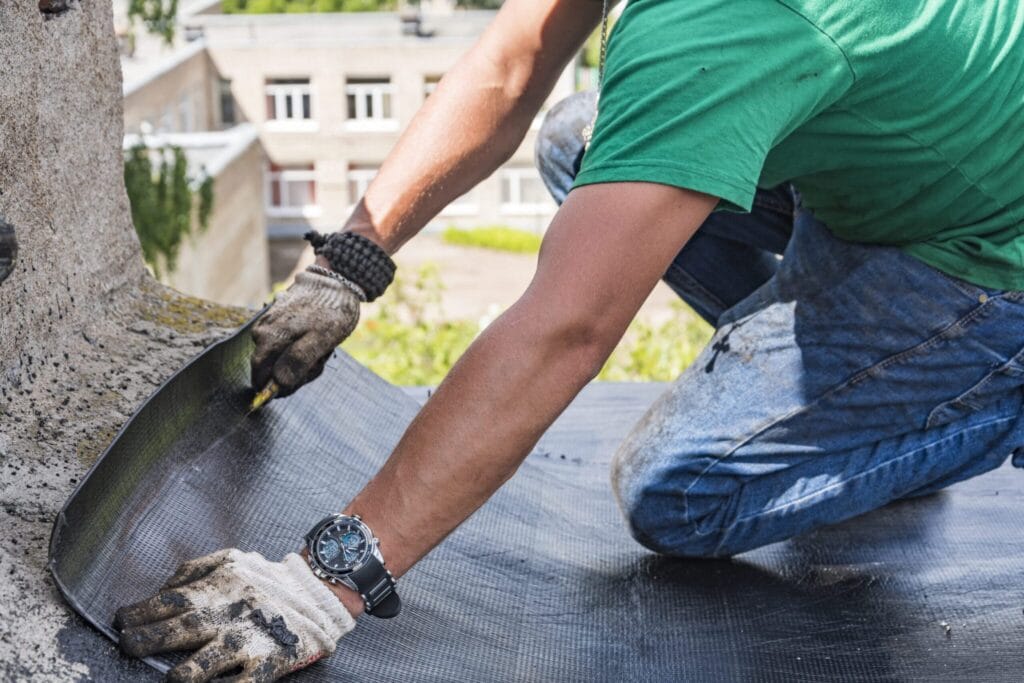
Flat roof repair approaches vary significantly depending on what system is on your building. Here’s what repair looks like for the three most common commercial membrane types.
TPO Flat Roof Repair
TPO is a thermoplastic membrane, which means repairs are made using a heat welder. Small punctures and tears are addressed by cutting a patch of TPO membrane larger than the damaged area, cleaning the surface, and heat-welding the patch in place. Seam repairs follow the same process, re-welding any sections where the bond has failed or separated.
The quality of a TPO repair depends heavily on the skill of the installer and the condition of the surrounding membrane. A patch on a membrane that’s brittle, heavily UV-degraded, or otherwise at the end of its life may not hold well because the surrounding material can’t bond effectively. In those cases, the repair is a temporary measure at best.
EPDM Flat Roof Repair
EPDM repairs use adhesive-based patching systems rather than heat welding. A compatible EPDM patch is cut and bonded over the damaged area using contact cement or seam tape. For seam failures, the existing seam is cleaned, re-primed, and re-bonded with fresh adhesive or seam tape.
EPDM repairs are relatively accessible and can often be performed without highly specialized equipment. The tradeoff is that adhesive bonds don’t last as long as heat-welded seams, so EPDM seam repairs on aging systems may need to be revisited.
PVC Flat Roof Repair
Like TPO, PVC is a thermoplastic membrane and is repaired using heat welding. PVC patches are heat-welded over damaged areas using the same process as installation. PVC is more chemically resistant than TPO, which is relevant for roofs near grease exhaust or chemical exposure, but repair techniques are broadly similar between the two.
Modified Bitumen Flat Roof Repair
Modified bitumen repairs typically involve applying a torch-down or cold-applied patch of compatible bitumen material over the damaged area. Small repairs can sometimes be addressed with compatible roofing cement or self-adhering patches for minor punctures or seam separations.
Built-Up Roofing (BUR) Repair
BUR repairs involve cutting out the damaged section and rebuilding it with new layers of bitumen and felt, matching the existing system. Minor repairs can sometimes be addressed with roofing cement and a compatible surfacing layer. BUR repairs are more labor-intensive than single-ply membrane repairs but are well-understood by experienced commercial roofing contractors.
What Flat Roof Repairs Actually Cost
Flat roof repair costs vary widely depending on the size of the damaged area, the membrane type, access conditions, and what’s discovered once work begins. A few reference points:
Minor repairs such as a small puncture, a localized seam separation, or a failed pipe boot seal typically run a few hundred dollars when caught early and addressed in isolation.
Moderate repairs covering a section of membrane, multiple seam failures, or flashing replacement across a significant area can run from a few hundred to several thousand dollars depending on scope.
Extensive repairs that address widespread seam failures, large punctured areas, or significant moisture infiltration into the insulation layer can approach the cost of a full restoration or replacement in square footage terms, which is where the repair vs. replace decision becomes critical.
The cost of not repairing is almost always higher than the repair itself. Water that enters through a small membrane breach and reaches the insulation and deck can cause damage that costs significantly more to remediate than the original repair would have.
Flat Roof Repair vs. Replacement: How to Decide
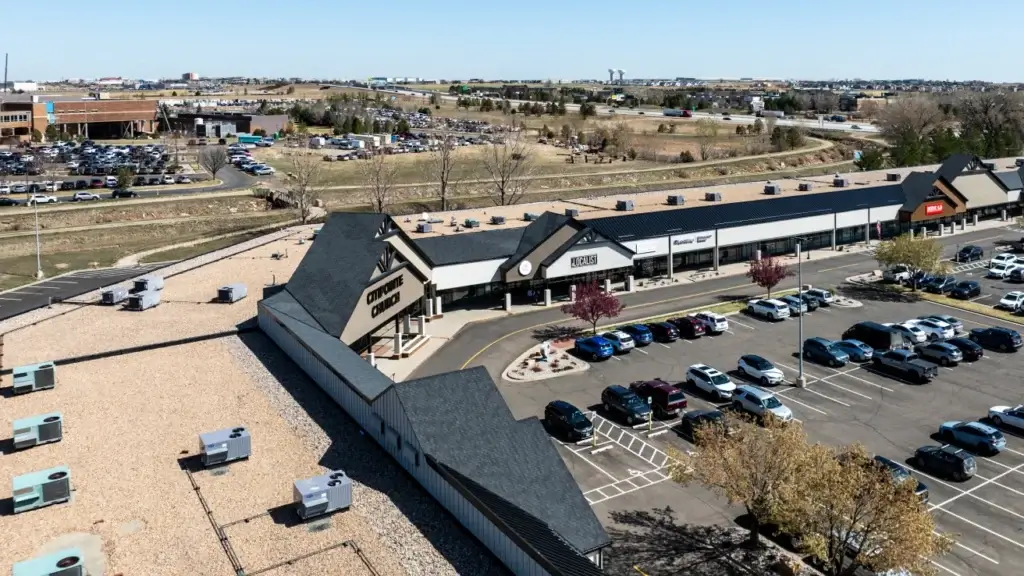
This is the question most building owners and property managers are really asking when they call about a flat roof problem. Here’s a practical framework for thinking through it.
Repair Makes Sense When
The damage is localized and the surrounding membrane is in good condition. If one section of seam has failed on a roof that’s otherwise sound, repair is the right call. There’s no reason to replace a system that still has years of service life simply because one area needs attention.
The roof is relatively young. A 5 to 8 year old membrane that’s been properly maintained and has sustained isolated damage from a hail event or rooftop work is a repair candidate, not a replacement.
The repair cost is a small fraction of replacement cost and the expected remaining life justifies it. If repairing a section of roof buys you 5 to 10 more years of service from a system that’s otherwise performing well, that’s typically a sound investment.
Replacement Makes More Sense When
The membrane is approaching or past its expected lifespan. Most commercial flat roof membranes are designed for 20 to 30 years. A membrane that’s 18 to 22 years old showing active problems is likely telling you it’s time rather than asking for another repair cycle.
Damage is widespread rather than isolated. When seam failures, punctures, or surface degradation are distributed across the roof rather than concentrated in one area, repairs become a game of whack-a-mole. Each fix addresses a symptom while the underlying system continues to fail.
Moisture has reached the insulation. Once water infiltration has compromised the insulation layer, you’re dealing with a scope that often approaches replacement anyway, and a new system at that point is a more logical investment than patching a membrane on top of wet insulation.
Repairs are becoming a recurring expense. If you’re calling a roofing contractor for the same roof every year or two, the cumulative repair cost is approaching what a replacement would have cost, and you’re not getting the reliability a new system would provide.
For more context on what flat roof replacement costs and what drives pricing, our guide to commercial roof maintenance covers the financial case for proactive management versus reactive repair spending.
Flat Roof Repair in Colorado: What’s Different
Colorado’s climate introduces a few factors that affect how flat roof problems develop and how they should be addressed.
Hail. Colorado’s hail frequency means flat roof membranes here face more puncture risk than in most markets. Thicker membrane specifications (60 and 80 mil for TPO and PVC) provide meaningfully better hail resistance than standard 45 mil and are worth specifying both at installation and when replacement becomes necessary.
Freeze-thaw cycling. Colorado’s wide temperature swings put repeated stress on seam adhesives and sealants. EPDM roofs in particular need more frequent seam inspection because adhesive bonds degrade faster in environments with significant thermal cycling. What’s a solid seam in summer may be a failing seam after a Colorado winter.
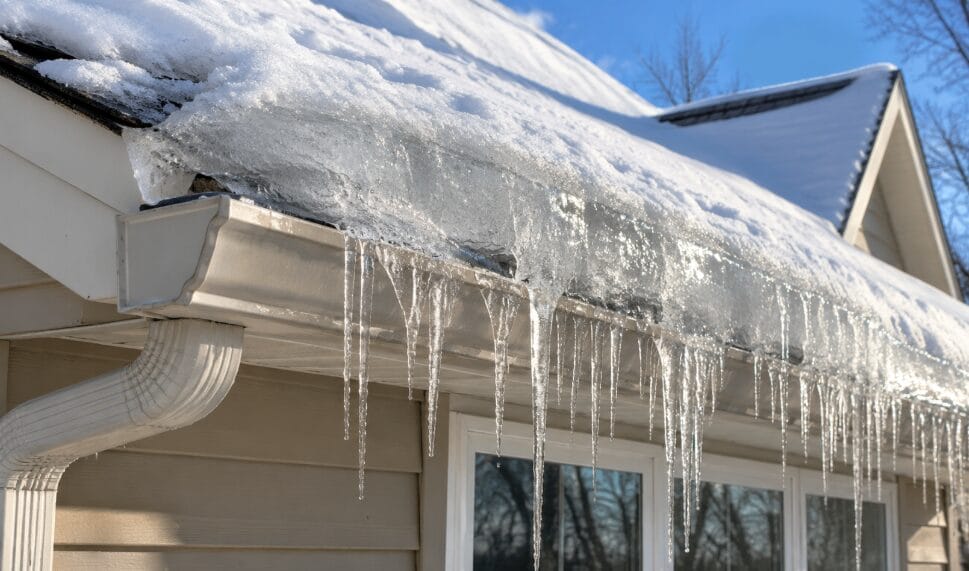
Drainage and snow. Snow accumulation on flat roofs creates drainage challenges when it melts. Clogged drains that back up during snowmelt can cause ponding and ice dam formation at roof edges, both of which accelerate membrane deterioration and create leak pathways at flashing details. Keeping drains clear before and during winter is particularly important in Colorado.
UV exposure. High-altitude UV intensity accelerates surface degradation of all membrane types faster than at lower elevations. Coating maintenance and regular inspection intervals matter more here than in less sun-intense markets.
Don’t Wait on a Flat Roof Problem
Flat roof issues don’t resolve themselves. A small seam separation that’s causing minor moisture infiltration today will be a larger, more expensive problem after the next hail season or winter freeze. The cost of addressing flat roof problems early is almost always a fraction of what deferred maintenance eventually costs.
At Roof Source, we inspect, repair, and replace flat roof systems for commercial buildings, multi-family properties, and residential additions across Colorado. Whether you’re dealing with an active leak or want a professional assessment of your roof’s current condition, we can give you a clear picture of where things stand and what makes sense.
Schedule a Free Flat Roof Inspection Today!
Frequently Asked Questions
What are the most common causes of flat roof leaks?
Seam and flashing failures, membrane punctures, ponding water, and deteriorated drainage systems are the most frequent sources of flat roof leaks. In Colorado, freeze-thaw cycling and hail impact are additional factors that accelerate these failure modes compared to milder climates.
Can a flat roof be repaired, or does it always need to be replaced?
Most flat roof problems can be repaired when caught early and when the surrounding membrane is in good condition. Repair becomes less viable when damage is widespread, the membrane is near the end of its lifespan, or moisture has reached the insulation layer. A professional inspection is the most reliable way to determine which situation you’re in.
How long do flat roof repairs last?
A well-executed repair on a membrane that’s otherwise in good condition can last many years. Repairs on aging or broadly deteriorated membranes tend to be shorter-lived because the surrounding material is also compromised. The longevity of a repair is closely tied to the condition of the membrane around the repair area.
How much does flat roof repair cost in Colorado?
Minor repairs for isolated punctures or seam failures typically run a few hundred dollars. More extensive repairs covering larger areas or multiple issues can run into the thousands. The only way to get an accurate number for your specific situation is a professional inspection and a detailed proposal from a qualified contractor.
What is the best material for a flat roof in Colorado?
TPO is the most commonly specified flat roof membrane for Colorado commercial buildings, offering a strong balance of energy efficiency, hail resistance at appropriate thickness, and heat-welded seam durability. EPDM remains viable for high-altitude buildings where extreme cold flexibility is a priority. PVC is the right call when chemical resistance is a specific requirement. Our EPDM vs. TPO vs. PVC comparison guide covers all three in detail.
How often should a flat roof be inspected?
At minimum, twice per year, in spring and fall. Additional inspections are worth scheduling after any significant hail or wind event and after any rooftop work performed by mechanical, electrical, or other trades. Regular documented inspections are also required to keep most manufacturer warranties valid.

Published on
September 17, 2026
There are no blocks availables