News
Preventing Ice Dams on Colorado Roofs
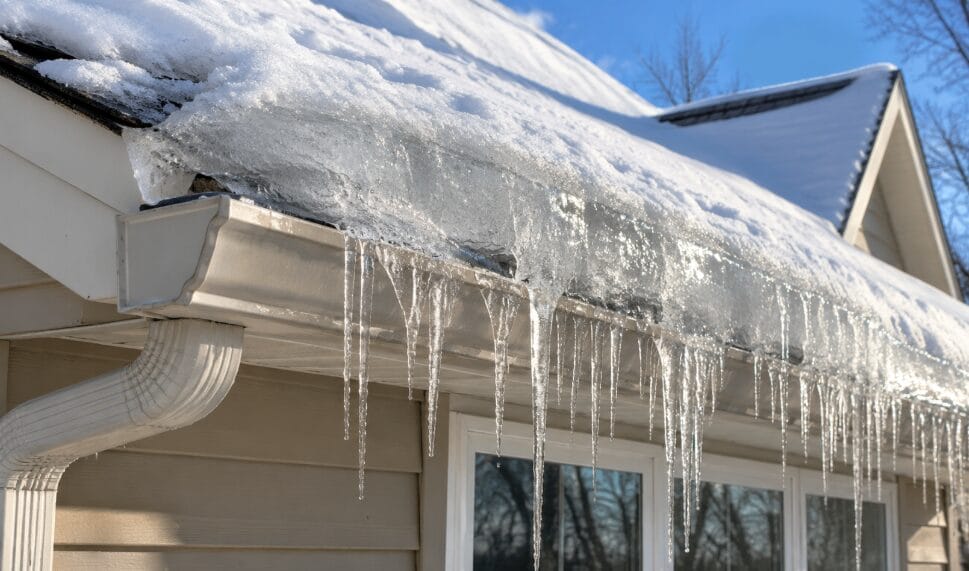
Every winter, Colorado homeowners discover the same thing: a ridge of ice along the roof edge, icicles hanging from the gutters, and sometimes water staining the ceiling inside. Ice dams are one of the most misunderstood roofing problems in the state, and because of that, most of the common “solutions” people reach for treat the symptom rather than the cause.
This article explains how ice dams actually form, why Colorado’s climate makes them particularly common, and what actually works to prevent them. Some of what’s here may surprise you.
The Real Cause of Ice Dams (It’s Not What Most People Think)
Most homeowners assume ice dams are a weather problem. And while cold temperatures are obviously involved, the root cause of ice dam formation is almost always happening inside the house.
Here’s the sequence:
- Heat escapes from your living space into the attic through gaps, poor insulation, or both.
- That heat warms the roof deck above it, which melts the snow sitting on the roof surface.
- The meltwater runs down the slope toward the eaves, where the roof surface is colder because it overhangs the exterior wall rather than the heated attic below.
- The water refreezes at the eave, forming a dam.
- As more meltwater accumulates behind that dam and has nowhere to go, it backs up under the shingles, past the underlayment, and eventually into the home.
The important insight here is that the problem originates below the roof, not on top of it. A cold attic, one that stays close to the outdoor temperature, produces a consistently cold roof surface. Snow on a cold roof doesn’t melt unevenly. It either stays put or melts from the sun at a rate the drainage system can handle. Ice dams don’t form.
This is why the gutters-as-villain explanation doesn’t hold up. Gutters don’t cause ice dams. They can make existing dams worse by giving ice something to anchor to, but removing your gutters won’t solve an ice dam problem if the attic is warm.
Why Colorado Is Particularly Vulnerable
Colorado’s Front Range is one of the more ice-dam-prone environments in the country, for reasons that are somewhat specific to the region.
Temperature Swings
Denver and the surrounding metro area regularly experience daytime highs above freezing followed by overnight lows well below it during December through February. That daily freeze-thaw cycle is exactly the pattern that drives ice dam formation: snow melts during the day, refreezes overnight, builds up, and the cycle repeats.
Intense Sunshine
Colorado averages more than 300 days of sunshine per year. Even on cold days, solar radiation actively melts snow on south and west-facing roof surfaces while north and east-facing slopes stay frozen. That asymmetric melting creates uneven drainage conditions that accelerate ice accumulation at certain eave locations.
Older Housing Stock
A significant portion of Colorado’s residential housing was built in decades when attic insulation standards were much lower than today. Many Denver-area homes built through the 1980s and 1990s were constructed with R-19 or R-25 attic insulation. The Department of Energy’s current recommendations for Colorado’s climate zones range from R-49 to R-60, meaning millions of square feet of Colorado homes are operating at roughly half the insulation level recommended for our climate. That gap is heat flowing upward into the attic every winter day.
Altitude Variation
Colorado homeowners at 5,000 feet and those at 9,000 feet are dealing with meaningfully different conditions. Higher-elevation communities see more total snowfall, colder sustained temperatures, and less of the solar melt that temporarily relieves ice accumulation at lower elevations. Mountain homes face more severe ice dam risk and require more robust prevention measures.
What Actually Prevents Ice Dams
Prevention happens on two levels: fixing the underlying cause and adding physical protection as a secondary line of defense.
Fix the Attic First
Air sealing is the highest-impact intervention and the one most homeowners skip because it’s less visible than adding insulation. Heat moves through air much more efficiently than it conducts through solid materials, which means even well-insulated attics can develop warm spots if air is leaking through gaps around light fixtures, attic hatches, plumbing penetrations, HVAC ducts, or wall-top plates.
ENERGY STAR’s seal-and-insulate guidance specifically prioritizes air sealing before insulation addition because insulation alone doesn’t stop air movement. A dollar spent on air sealing typically does more to reduce heat loss, and therefore ice dam risk, than the same dollar spent on additional insulation.
Insulation levels. Once air leaks are addressed, insulation quantity matters. Colorado’s climate zones (most of the Front Range is Zone 5, with mountain areas in Zones 6 and 7) call for attic insulation in the R-49 to R-60 range. If you don’t know what your attic currently has, a quick check with a ruler or tape measure gives you a baseline. Fiberglass batts compress to about 3.5 inches per R-13 batt. Blown-in cellulose or fiberglass runs roughly R-3.5 per inch. If you’re looking at less than 12 to 14 inches of blown-in insulation, you’re likely under-insulated for Colorado’s climate.
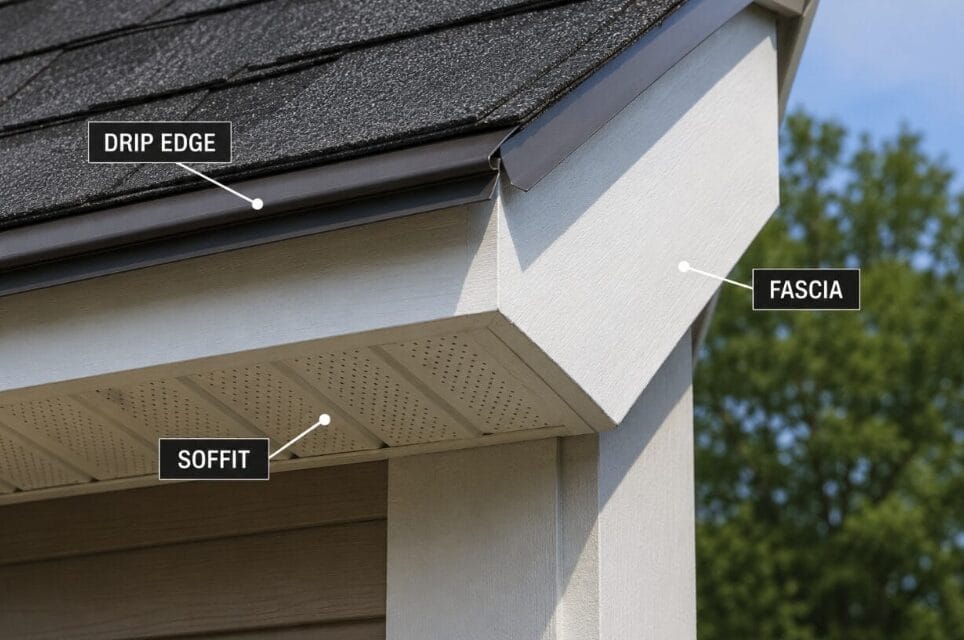
Attic ventilation. Proper ventilation keeps the attic cold by allowing outside air to flush through the space and remove heat. A balanced system with soffit vents at the eave and ridge vents or gable vents at the top of the attic creates a continuous airflow path. When soffit vents get blocked by blown-in insulation (a common installation error), the ventilation circuit breaks down and the attic warms up. If you’re adding insulation, verify the soffit vents remain clear.
Protect the Vulnerable Zone
Even a well-insulated, well-ventilated attic can’t fully eliminate ice dam risk in Colorado’s climate. Certain roof geometries, valleys, dormers, and low-slope sections over additions or porches are inherently harder to protect. That’s where physical protection matters.
Ice and water shield (ice barrier membrane). This is a self-adhering rubberized membrane installed on the roof deck at the eaves before shingles go on. When ice dams form and water backs up behind them, ice and water shield prevents that water from reaching the decking and framing. It doesn’t stop the dam from forming, but it limits the damage from water intrusion.
Colorado building codes (following the International Residential Code) require ice barrier installation in cold climate zones, typically extending 24 inches inside the interior wall line from the eave. In high-snow areas, extending it further is prudent. If your current roof was installed without ice and water shield at the eaves, this is a meaningful upgrade to specify the next time the roof is replaced.
Heat cables. Electric heat cables installed in a zigzag pattern along the eave and through downspouts create a channel for meltwater to drain even when ice is present. They’re a reactive measure rather than a cure, and they consume electricity during the coldest periods of the year when energy costs are already elevated. That said, they’re a practical tool for roofs where fixing the underlying attic conditions isn’t feasible, and for specific problem areas like porch roofs or low-slope sections where insulation solutions don’t fully apply.
Walking Mountains Science Center in Avon, Colorado, notes that heat tape should be understood as a bandage rather than a fix, and cautions that running heat cables unnecessarily wastes significant energy. Use them where needed, but don’t let them substitute for addressing the attic.
If You Already Have an Ice Dam: What to Do (and What Not to Do)
If a dam has already formed and water is actively leaking into the home, the priority is managing the immediate situation safely.
What works:
A professional contractor with a heated low-pressure water system can melt channels through the dam to allow drainage. This is the safest and most effective emergency removal method. Some homeowners also fill a nylon stocking with calcium chloride ice melt and lay it perpendicular across the dam to create a drainage channel, though this is a temporary measure.
What to avoid:
Using a pick, axe, hammer, or chisel to chip at ice on the roof. This damages shingles and can create safety hazards from falling ice, and it doesn’t address the underlying accumulation.
Getting on an icy roof yourself. Ice-covered roofs are among the most dangerous surfaces a person can stand on. Professional contractors have appropriate equipment and training for this work.
Using rock salt on your roof. Salt damages shingles, corrodes gutters and metal components, and harms landscaping below. Calcium chloride is the appropriate deicer for roof use in specific applications.
Prevention is Key
Most of the guidance homeowners find on ice dams focuses on managing them after they appear. The better investment is making sure they don’t form in the first place, and that means looking at the attic rather than the roof surface.
If you’re dealing with recurring ice dams, the diagnostic question is: why is my roof warm enough to melt snow? The answer is almost always found in air sealing deficiencies, insufficient insulation, or blocked ventilation, and all three are fixable.
If you’re planning a roof replacement, it’s an ideal time to address ice and water shield installation and to have the attic evaluated as part of the project. A new roof installed on top of an under-insulated attic will produce the same ice dams as the old one.
Quick Reference: Ice Dam Prevention
| Action | Impact Level | When to Do It |
|---|---|---|
| Air seal attic penetrations | High | Before adding insulation |
| Upgrade attic insulation to R-49 to R-60 | High | As part of any energy retrofit |
| Verify soffit vents are clear | High | After any insulation work |
| Install ice and water shield at eaves | Medium | At next roof replacement |
| Install heat cables in problem areas | Medium | As needed for unresolvable spots |
| Keep gutters clear of debris | Low to medium | Every fall |
| Rake snow from the lower 3 to 4 feet of the roof after heavy storms | Situational | After significant snowfall |
Roof Source Can Help
Roof Source works with Colorado homeowners to address ice dam damage and identify underlying roofing issues. Our team can also evaluate your roof and attic conditions to help prevent future problems.
Schedule a Free Roof Inspection Today!
Frequently Asked Questions
What causes ice dams on Colorado roofs?
Ice dams form when heat escaping from the living space into the attic warms the roof deck, causing snow to melt. The meltwater runs toward the cold eaves, refreezes, and accumulates into a dam. Colorado’s freeze-thaw temperature cycles, intense solar radiation, and older housing stock with inadequate attic insulation all contribute to the problem.
How do I prevent ice dams permanently?
The most effective long-term prevention is addressing the attic: sealing air leaks first, then upgrading insulation to the R-49 to R-60 range recommended for Colorado’s climate zones, and verifying attic ventilation is balanced and unobstructed. Ice and water shield installed at the eaves provides a secondary layer of protection.
Does removing snow from my roof prevent ice dams?
Raking the lower 3 to 4 feet of snow from the roof after heavy storms reduces the material available to melt and refreeze. It’s a useful short-term measure but doesn’t address the heat loss that drives ice dam formation. It also carries safety risks if done improperly.
Are heat cables a good solution for ice dams?
Heat cables are a practical tool for specific problem areas, particularly roofs where attic improvements aren’t feasible or for low-slope sections inherently prone to accumulation. They’re a management measure rather than a cure, and they consume meaningful amounts of electricity. They work best as a supplement to proper attic conditioning, not a substitute for it.
Will new gutters fix my ice dam problem?
No. Gutters don’t cause ice dams and replacing them won’t prevent formation. Keeping gutters clean improves drainage and reduces the surface area where ice can anchor, but the root cause is heat loss through the attic.
What damage can ice dams cause?
Water backing up behind an ice dam can infiltrate under shingles and underlayment, damaging the roof deck, wall framing, insulation, interior ceilings, and finishes. Damage is often hidden until spring, by which point moisture has had months to cause mold and rot. Large ice formations can also detach suddenly, creating falling hazards over entrances and walkways.

Published on
October 30, 2026
There are no blocks availables