News
EPDM vs TPO vs PVC: Commercial Membrane Comparison
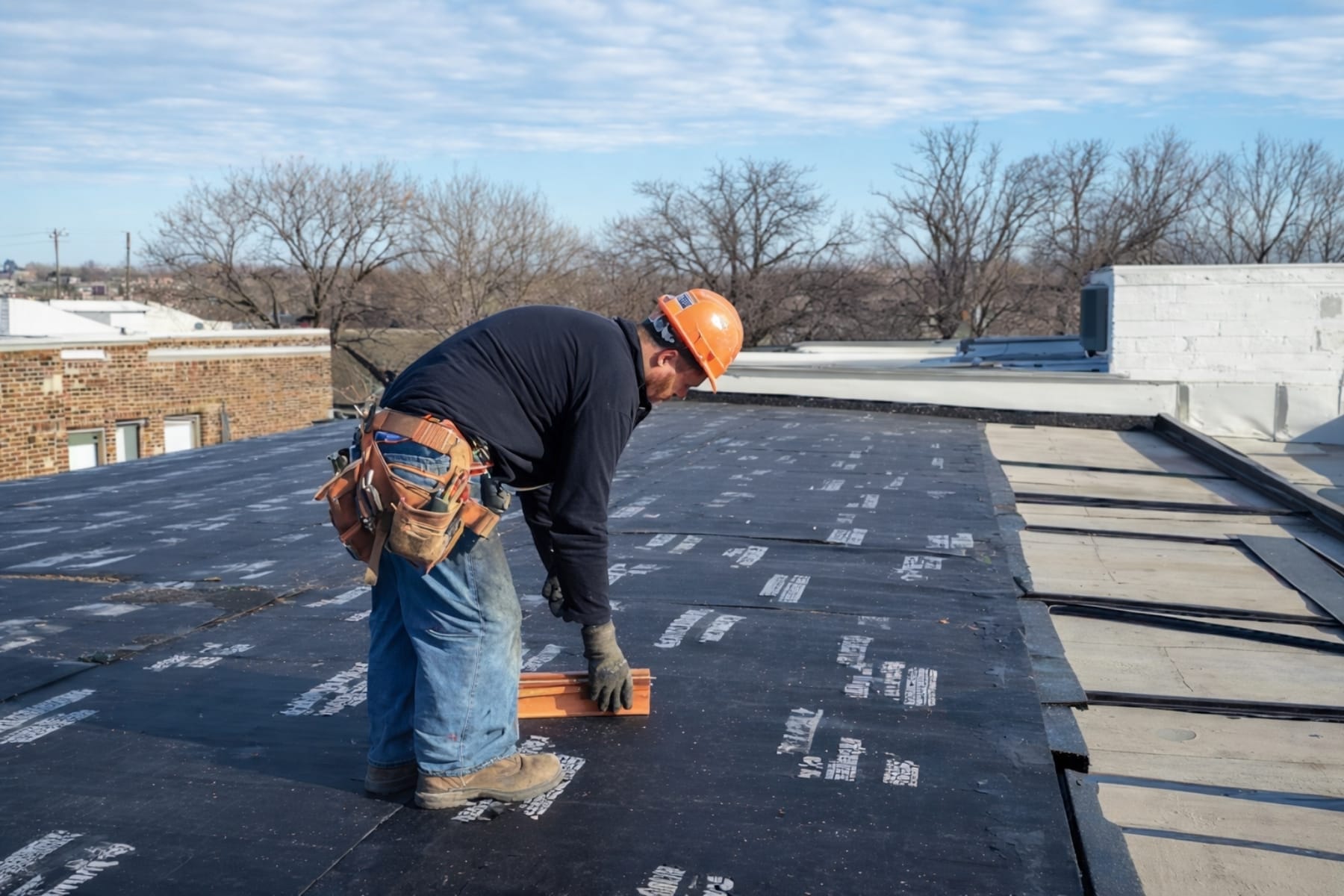
If you’re replacing a flat or low-slope commercial roof, the membrane system you choose will determine how that roof performs for the next 20 to 30 years. It’s not a decision to make based on what your last contractor happened to install, or what your neighbor’s building manager used. The three dominant single-ply membrane options, EPDM, TPO, and PVC, are genuinely different products with different strengths, and the right one depends on your building, your climate, and your priorities.
This guide breaks down all three in enough detail to make a real decision. If you’re coming here specifically for a deep dive on TPO, our complete TPO roofing guide covers installation, cost, thickness, warranty, and Colorado performance in full. This article is the comparison layer, the one that helps you figure out which membrane belongs on your building before you go deeper on any single one.
A Quick Overview of Each System
Before getting into the head-to-head comparisons, here’s a working understanding of each material.
EPDM (Ethylene Propylene Diene Monomer) is a synthetic rubber membrane that has been used on commercial roofs since the 1960s. It’s the oldest of the three systems and has the longest track record. EPDM is almost always installed in black, which is its most recognizable characteristic and one of its key trade-offs.
TPO (Thermoplastic Polyolefin) is a heat-weldable single-ply membrane that emerged in the 1990s and has since become the most widely installed commercial roofing membrane in the country. It’s almost always white, which is a significant performance advantage in climates with meaningful cooling loads.
PVC (Polyvinyl Chloride) is also a heat-weldable thermoplastic membrane, and it’s been used on commercial roofs since the 1970s. It’s the most chemically resistant of the three and often the most expensive, with specific performance advantages that make it the right call in certain situations.
All three are single-ply membranes designed for flat and low-slope roofs. All three are installed in large sheets with overlapping seams. What separates them is how those seams are bonded, how they handle heat and cold, how they respond to chemical exposure, and how they perform over decades of weathering.
How the Seams Work: A Critical Difference
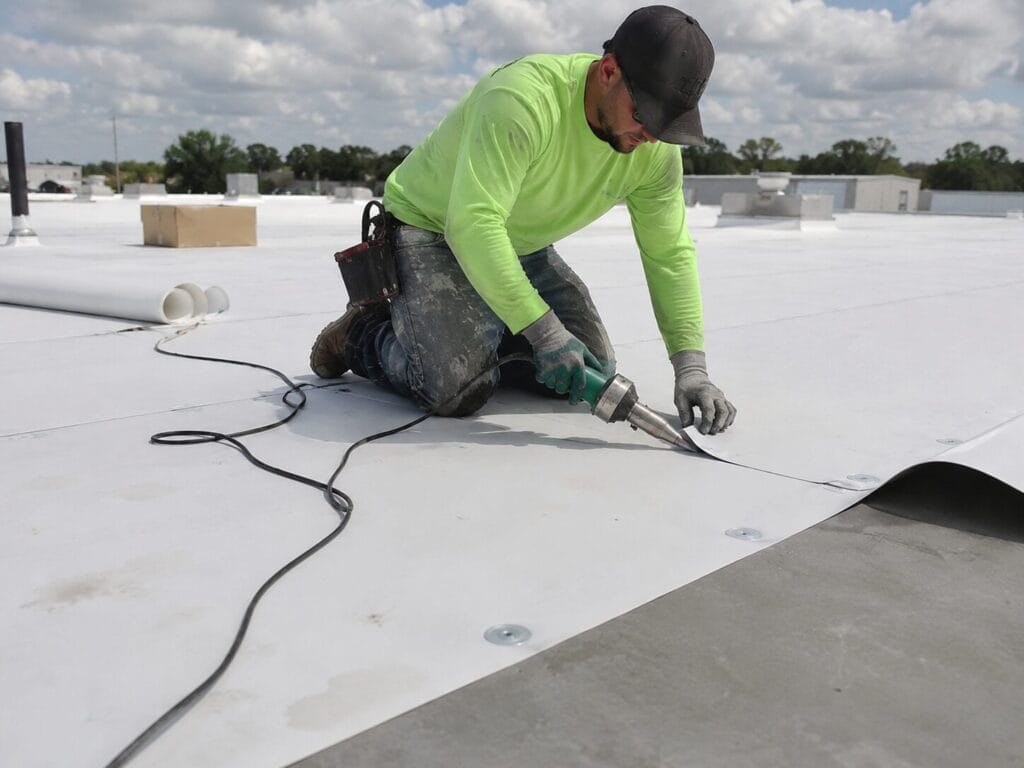
Seam integrity is one of the most important factors in any single-ply membrane system, and the three materials handle seams very differently.
TPO and PVC are both thermoplastic materials, which means they can be heat-welded. Overlapping seams are fused together using a hot-air welder, literally melting the two layers into a single continuous bond. When done correctly by an experienced installer, heat-welded seams are stronger than the membrane itself. They don’t rely on adhesives that can dry out or fail over time.
EPDM is a thermoset rubber, which means it cannot be heat-welded. EPDM seams are bonded using adhesive tape or contact cement applied to the overlapping membrane edges. Adhesive seams are inherently less durable than heat-welded seams and represent the most common point of failure in EPDM systems. They’re more susceptible to separation from thermal cycling and UV degradation over time.
This seam difference is one of the most substantive technical distinctions between the systems and worth understanding before you hear a contractor pitch you on any of the three.
EPDM vs. TPO vs. PVC: Side-by-Side Comparison
| Category | EPDM | TPO | PVC |
|---|---|---|---|
| Material type | Thermoset rubber | Thermoplastic | Thermoplastic |
| Standard colors | Black (white available) | White, gray, tan | White, gray, tan |
| Seam bonding | Adhesive tape/cement | Heat-welded | Heat-welded |
| Typical lifespan | 20-30 years | 20-30 years | 20-30 years |
| Relative cost | Low to moderate | Moderate | Moderate to high |
| Energy efficiency | Low (black absorbs heat) | High (white reflects heat) | High (white reflects heat) |
| Chemical resistance | Moderate | Moderate | Excellent |
| Cold flexibility | Excellent | Good | Moderate |
| Hail resistance | Good | Good (better at 60/80 mil) | Good |
| Puncture resistance | Moderate | Good | Good |
| Repair ease | Easy (patch and adhesive) | Moderate (requires welder) | Moderate (requires welder) |
| Foot traffic tolerance | Moderate | Good | Good |
| Manufacturer warranty | 10-30 years | 10-30 years | 10-30 years |
EPDM vs. TPO: The Most Common Comparison
TPO has largely displaced EPDM as the default commercial membrane in new installations across much of the country, including Colorado. Understanding why helps clarify where each one still makes sense.
Where TPO Wins
Energy performance. This is the most clear-cut advantage. TPO’s white surface reflects solar radiation rather than absorbing it, which reduces heat transfer into the building and lowers cooling costs during warm months. EPDM’s black surface does the opposite. In Colorado, where high-altitude UV intensity is significant and summers can be hot even at elevation, that reflectivity difference translates to real energy costs over the life of the roof.
Seam strength. As discussed above, TPO’s heat-welded seams outperform EPDM’s adhesive bonds over the long term. This matters most in Colorado’s climate, where wide temperature swings cause repeated thermal expansion and contraction that puts stress on seam adhesives year after year.
Modern product quality. Early TPO formulations in the 1990s had quality issues. Current products from reputable manufacturers have addressed those problems, and the best TPO systems today offer consistent, reliable performance that EPDM can’t match on energy efficiency.
Where EPDM Wins
Cold flexibility. EPDM is rubber, and rubber stays flexible at very low temperatures. In mountain communities where temperatures drop well below zero in winter, EPDM maintains its flexibility better than TPO, which can stiffen in extreme cold. For buildings in high-altitude Colorado locations with harsh winters, this is worth factoring in.
Repair simplicity. EPDM repairs are relatively straightforward and can often be performed without specialized equipment. A patch and appropriate adhesive is usually sufficient for small repairs. TPO repairs require a heat welder, which means more specialized labor for anything beyond a minor fix.
Track record. EPDM has been on commercial roofs since the 1960s. Its long-term performance is well-documented in a way that TPO’s simply can’t be yet. For building owners who place high value on proven materials, that history is meaningful.
Upfront cost. EPDM is typically less expensive installed than TPO, which can be a deciding factor for budget-constrained projects where energy savings aren’t the primary consideration.
The Bottom Line on EPDM vs. TPO
For most commercial buildings in Colorado, particularly in urban and suburban Front Range locations, TPO is the stronger choice. The energy performance advantage is real, the heat-welded seams are more durable, and the product quality from reputable manufacturers is well-established.
EPDM makes more sense for mountain buildings at high elevation where extreme cold flexibility is a priority, for smaller or budget-constrained projects where the energy savings won’t offset the cost premium, and for building owners who strongly prefer a material with a longer documented track record.
TPO vs. PVC: A Closer Call
TPO and PVC are more closely matched than EPDM and TPO because they share the same thermoplastic chemistry and heat-welded seam installation. The differences are real but more situational.
Where PVC Wins
Chemical resistance. This is PVC’s clearest advantage and the most common reason to specify it over TPO. PVC is highly resistant to a wide range of chemicals, including oils, greases, and many industrial solvents. For restaurants, commercial kitchens, food processing facilities, automotive businesses, or any building where rooftop grease exhaust or chemical exposure is a factor, PVC is the better choice. TPO and EPDM can both degrade when exposed to these substances over time.
Historical track record. PVC has been in commercial use since the 1970s, giving it a longer documented performance history than TPO. Some building owners and consultants prefer PVC for this reason alone on high-stakes projects.
Fire resistance. PVC generally offers better inherent fire resistance than TPO, which can be relevant depending on local code requirements or occupancy type.
Where TPO Wins
Cost. PVC is typically more expensive than TPO per square foot installed, sometimes significantly so depending on the product tier and manufacturer. For a large commercial roof, that cost difference adds up quickly.
Environmental profile. PVC contains plasticizers (typically phthalates) that can leach out over time and raise environmental concerns. TPO doesn’t require plasticizers, which makes it a cleaner option from a sustainability standpoint. For buildings pursuing LEED certification or other green building standards, this can be a relevant factor.
UV stability over time. Some PVC formulations can lose flexibility as plasticizers migrate out of the membrane over decades. TPO doesn’t have this mechanism of degradation.
The Bottom Line on TPO vs. PVC
For standard commercial buildings without specific chemical exposure concerns, TPO is typically the better value. It performs comparably to PVC in most categories at a lower installed cost.
PVC earns its premium in specific situations: buildings with rooftop grease exhaust, chemical storage or processing environments, applications where fire resistance is a heightened concern, or projects where a longer documented track record is worth the additional cost.
EPDM vs. PVC: When This Comparison Comes Up
This one comes up less frequently because the two materials don’t directly compete for the same applications as often. PVC’s chemical resistance advantage over EPDM is significant, its energy performance advantage is the same as TPO’s, and its heat-welded seams outperform EPDM’s adhesive bonds in the same ways TPO does.
The primary scenario where EPDM beats PVC is cost, and specifically cold-climate performance. For high-altitude mountain buildings where budget is constrained, EPDM’s lower cost and excellent cold flexibility make it a viable alternative to PVC.
What About “Rubber Roofing”?
You’ll sometimes see the term “rubber roofing” used in a way that could mean EPDM, TPO, or even modified bitumen depending on who’s talking. It’s worth clarifying.
EPDM is true rubber, a thermoset synthetic rubber membrane. TPO contains rubber in its formulation (ethylene-propylene rubber) but behaves like a thermoplastic rather than a traditional rubber. When a contractor or building owner says “rubber roof” without further specification, they usually mean EPDM, but it’s worth asking for clarification to make sure you’re talking about the same product.
How Colorado’s Climate Affects the Decision
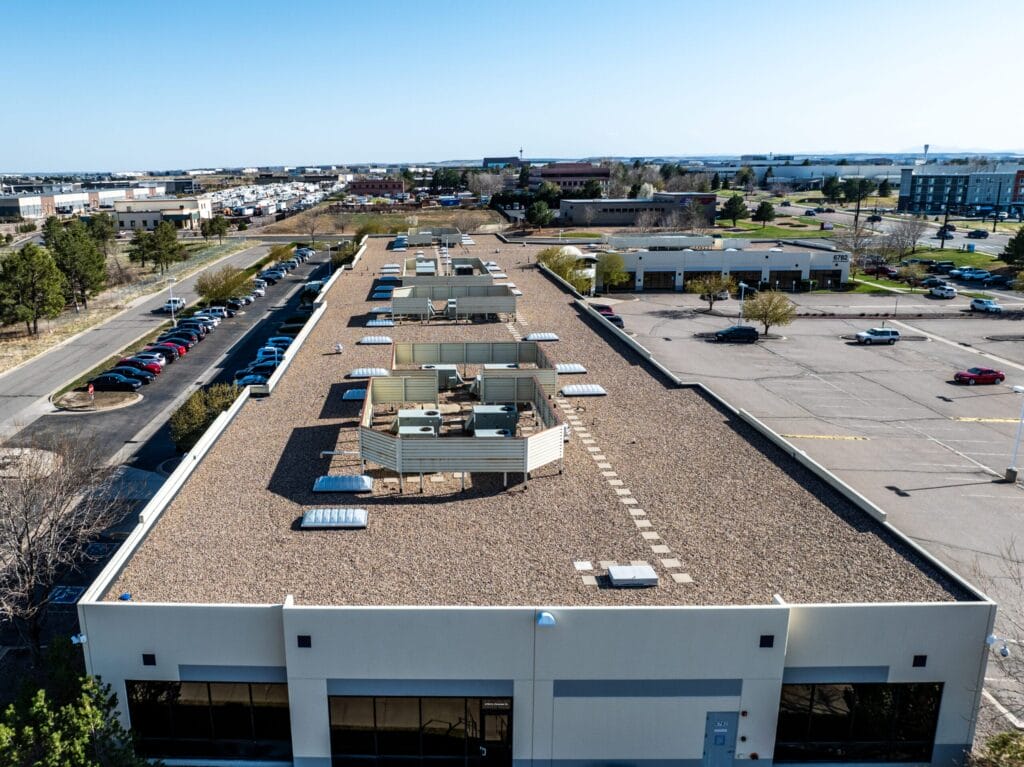
Colorado’s specific conditions shift the analysis in a few meaningful ways that aren’t always captured in generic membrane comparison content.
Hail. Colorado’s hail frequency makes membrane thickness a more important consideration than it might be elsewhere. Thicker membranes, 60 and 80 mil for TPO and PVC, offer meaningfully better impact resistance than 45 mil. EPDM’s rubber composition gives it reasonable hail resistance at standard thickness, but it’s also worth specifying thicker options in high-hail zones.
UV intensity. High-altitude UV exposure accelerates the degradation of all membrane materials faster than at lower elevations. TPO and PVC’s reflective white surfaces help by rejecting radiation rather than absorbing it. For EPDM installations, some building owners apply a reflective coating to address both UV degradation and energy performance.
Temperature range. Colorado’s wide temperature swings, from hot summer days to well-below-zero winter nights, stress all membrane systems through repeated expansion and contraction. Heat-welded seams in TPO and PVC handle this better than adhesive-bonded EPDM seams. EPDM’s rubber flexibility handles extreme cold better than TPO at standard temperatures.
Energy costs. Reflective roofing carries more value in markets with significant cooling loads. In Front Range urban areas where summers can be warm and cooling costs are real, the energy performance advantage of white TPO or PVC over black EPDM is a legitimate financial consideration over the roof’s life.
Making the Decision: A Simple Framework
If you’re still weighing which membrane is right for your building, here’s a practical framework.
Choose TPO if: You want the best balance of energy performance, seam durability, cost, and environmental profile for a standard commercial building in Colorado. It’s the right default for most applications.
Choose PVC if: Your building has rooftop grease exhaust, chemical exposure, or a specific application where chemical resistance or fire resistance is a heightened concern. The cost premium is worth it in those scenarios.
Choose EPDM if: Your building is at high altitude with extreme winter temperatures, your budget favors the lower upfront cost, or you strongly prefer a material with a longer documented track record and simpler repair profile.
Get a Professional Assessment for Your Building
The right membrane for your building depends on factors a comparison article can only partially address: your roof’s specific drainage design, equipment loads, local code requirements, and long-term asset management goals all factor into a good specification decision.
At Roof Source, we install all three membrane systems and don’t have a financial incentive to push you toward any particular one. Our job is to help you match the right system to your building and install it in a way that performs for the full life of the roof.
Schedule a Commercial Roof Inspection Today!
Frequently Asked Questions
What is the difference between TPO and EPDM roofing?
TPO is a white thermoplastic membrane with heat-welded seams and strong energy efficiency from its reflective surface. EPDM is a black synthetic rubber membrane with adhesive-bonded seams and excellent cold flexibility. TPO generally outperforms EPDM on energy efficiency and seam durability. EPDM has advantages in extreme cold and simpler repair requirements.
Is TPO or PVC better for commercial roofing?
For most standard commercial buildings, TPO offers better value. PVC is the stronger choice in specific situations: buildings with chemical or grease exposure, applications with elevated fire resistance requirements, or projects where a longer documented track record is worth the cost premium.
What is rubber roofing?
Rubber roofing typically refers to EPDM, a synthetic thermoset rubber membrane that has been used on commercial flat roofs since the 1960s. TPO contains rubber compounds but is technically a thermoplastic rather than a traditional rubber. The term is used loosely in the industry, so it’s worth clarifying which product a contractor is referring to.
Which commercial roofing membrane lasts the longest?
All three, EPDM, TPO, and PVC, have similar rated lifespans of 20 to 30 years under normal conditions. Actual lifespan depends more on installation quality, maintenance, and environmental exposure than on material type alone. Documented maintenance and prompt repairs are the most reliable way to reach or exceed rated lifespan regardless of which system you choose.
Which membrane is best for Colorado commercial buildings?
TPO is the strongest default choice for most Colorado commercial buildings, given the state’s high UV exposure, hail frequency, and meaningful cooling loads along the Front Range. EPDM remains viable for high-altitude mountain buildings where extreme cold flexibility is a priority. PVC is the right call when chemical resistance is a specific requirement.
How do TPO, EPDM, and PVC compare on cost?
EPDM is typically the least expensive installed. TPO falls in the middle and represents strong value for most applications. PVC is generally the most expensive of the three. Cost differences vary by project size, thickness specification, attachment method, and market conditions. Getting detailed proposals from a qualified contractor is the best way to understand actual cost for your building.
Can EPDM be made more energy efficient?
Yes. White EPDM membranes are available, though less common than black. Reflective coatings can also be applied over existing black EPDM to improve solar reflectance. Neither approach fully closes the gap with TPO or PVC’s inherent energy performance, but both can meaningfully improve efficiency compared to uncoated black EPDM.

Published on
September 10, 2026
There are no blocks availables