Insights
EPDM & Rubber Roofing Explained: Benefits, Cost & Lifespan
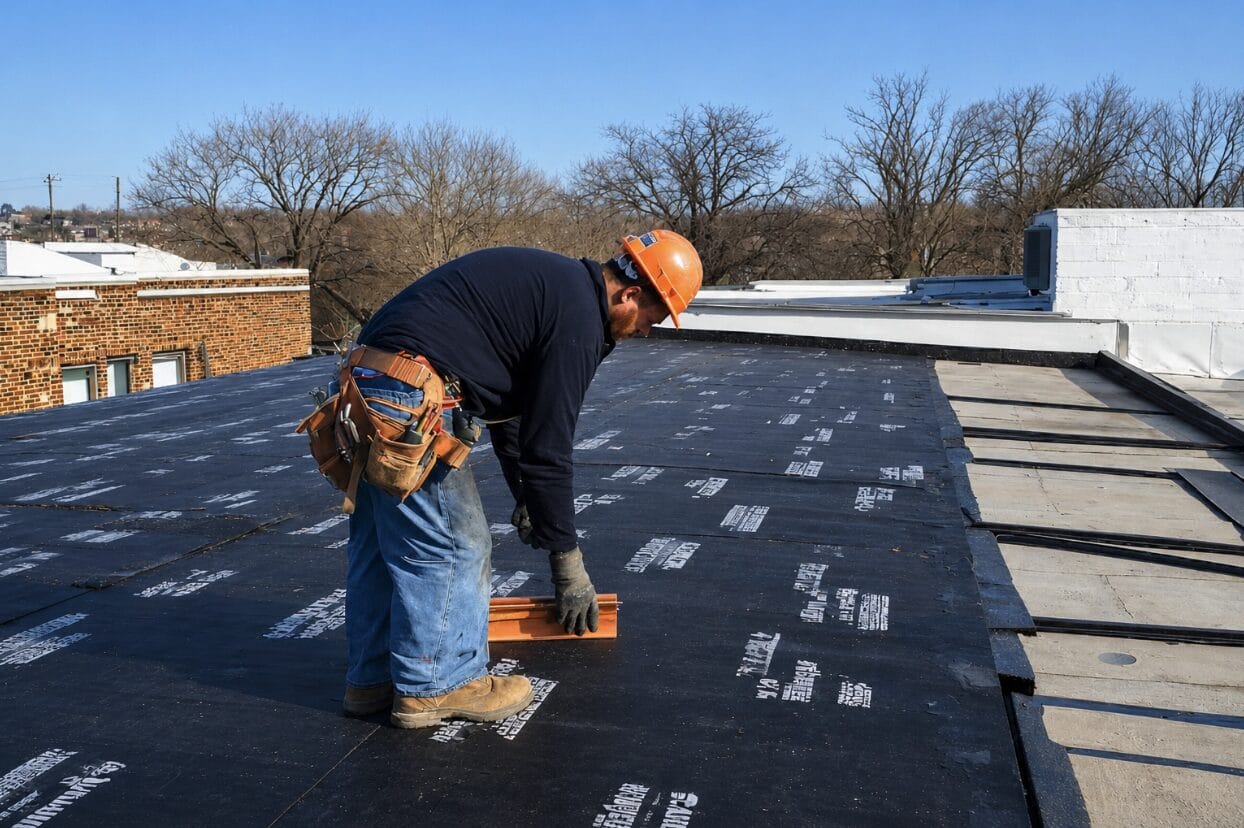
If you’ve ever seen a flat commercial roof covered with a large black membrane, there’s a good chance it was EPDM. This single-ply roofing system has been used on American buildings since the 1960s, giving it decades of proven performance in commercial roofing applications.
That long history is one reason EPDM continues to be specified today, even as TPO has become more common for new commercial installations. EPDM offers several advantages that continue to make it a strong choice for certain buildings, but it also has some limitations. Understanding those strengths and drawbacks can help you determine if EPDM is the right roofing system for your property.
This guide covers how EPDM works, how it’s installed, what it costs, how long it lasts, and how it holds up against Colorado’s hail, UV exposure, and freeze-thaw conditions.
What Is EPDM Roofing?
EPDM stands for Ethylene Propylene Diene Monomer, a synthetic rubber roofing membrane made primarily from ethylene and propylene, along with carbon black and other stabilizing materials.
Unlike TPO and PVC, which are thermoplastic membranes that can be heat-welded, EPDM is a thermoset membrane. Once cured, it cannot be melted and welded together. Instead, seams are connected using adhesives and specialized seam tape.
EPDM is manufactured in large rolls, typically ranging from 7.5 to 50 feet wide. These wide sheets allow contractors to cover large roof areas with fewer seams. Since seams are common areas for leaks to develop, reducing their number can help improve the roof’s long-term performance.
EPDM is generally available in two colors:
- Black EPDM is the standard and most widely used option. It is typically less expensive and offers excellent resistance to UV exposure.
- White EPDM has a reflective white surface that can help reduce heat absorption. It generally costs more and has different performance and aging characteristics than traditional black EPDM.
Where “Rubber Roofing” Fits In
The term “rubber roofing” can mean different things depending on the type of project. In commercial roofing, it almost always refers to EPDM. In residential roofing, however, the term may also be used for modified bitumen, rubberized asphalt, or rubber shingles made from recycled materials. These products are not the same and can perform very differently.
If a roofing quote simply lists a “rubber roof,” ask if the material is EPDM. You’ll also want to confirm the membrane thickness and how it will be attached, since both can affect the roof’s performance, lifespan, and cost.
EPDM Membrane Thickness
EPDM roofing is measured in mils, with three common thickness options:
- 45 mil is the thinnest and most affordable option. It can work well for low-traffic roofs in milder conditions, but it offers less protection against punctures and hail damage.
- 60 mil is the most common choice for commercial buildings. It provides better puncture and impact resistance than 45 mil without a significant jump in cost.
- 90 mil is the heaviest option and provides greater protection against hail, foot traffic, and other types of mechanical damage. It may also qualify for longer manufacturer warranties.
Reinforced EPDM is another option. These membranes contain an internal fabric layer that increases tear strength, making them particularly useful for mechanically attached systems where fasteners place additional stress on the membrane.
For commercial buildings in Colorado, 60 mil is generally a better starting point than 45 mil due to the potential for hail and harsh weather. Buildings with frequent rooftop traffic or greater hail exposure may benefit from upgrading to 90 mil EPDM.
How EPDM Is Installed
EPDM installation involves more than simply attaching the membrane to the roof. Contractors first choose an attachment method, then seal the seams between membrane sheets and detail areas around penetrations, drains, and roof edges.
EPDM Attachment Methods
There are several ways to secure EPDM to a roof, with fully adhered, mechanically attached, and ballasted systems among the most common.
Fully Adhered EPDM
The membrane is bonded across the roof surface using adhesive. This creates a smooth appearance and provides strong wind uplift resistance, but it requires more labor and typically costs more.
Mechanically Attached EPDM
Screws and plates secure the membrane to the roof deck, typically along the laps. This method is faster and often less expensive than a fully adhered system, although the membrane can experience some movement or billowing in high winds.
Ballasted EPDM
The membrane is loosely laid over the roof and held in place with river rock or concrete pavers. While installation can be relatively quick, the added weight requires adequate structural support and can make leaks more difficult to locate.
How EPDM Seams Are Sealed
Unlike TPO and PVC, EPDM cannot be heat-welded. Where two membrane sheets meet, contractors typically use primer and seam tape to create a watertight connection.
Proper preparation is especially important. The membrane must be clean and dry, and primers and tapes need to be applied according to manufacturer requirements. Poorly installed seams can become a common source of leaks as the roof ages.
EPDM Flashing and Roof Details
Flashing protects some of the most vulnerable areas of an EPDM roof, including pipes, drains, HVAC curbs, parapet walls, and other penetrations or transitions.
Contractors commonly use uncured EPDM flashing in these areas because it can conform to irregular shapes before being bonded into place. Careful flashing installation helps prevent water from getting beneath the membrane.
The Benefits of EPDM
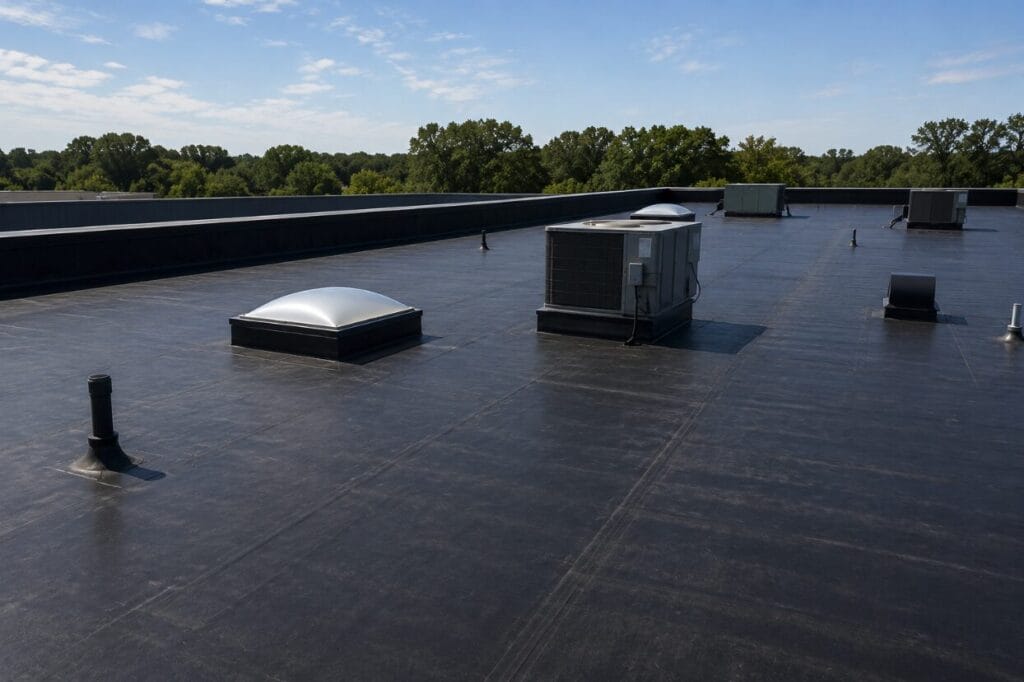
EPDM has remained a popular commercial roofing material for decades because it offers a combination of durability, flexibility, and affordability.
Proven Longevity
EPDM has been used on North American roofs for roughly 60 years, giving contractors and building owners decades of real-world performance data. Few modern roofing membranes have such a long track record.
Excellent Cold-Weather Flexibility
EPDM remains flexible at very low temperatures, allowing the membrane to handle expansion and contraction without becoming brittle. This makes it particularly well-suited for climates with cold winters and frequent temperature changes.
Strong UV and Ozone Resistance
The carbon black used in traditional black EPDM provides excellent resistance to UV and ozone exposure. This is an especially useful characteristic in Colorado, where higher elevations can mean greater UV exposure.
Fewer Seams
EPDM is available in wide rolls that allow contractors to cover large sections of a roof with fewer seams. Reducing the number of seams also reduces the number of areas that require additional sealing and maintenance over the life of the roof.
Straightforward Repairs
Punctures, damaged areas, and seam problems can typically be repaired using EPDM patching materials, primer, and compatible adhesives or tapes. Because EPDM has been used for decades, most experienced commercial roofing contractors are familiar with repairing and maintaining it.
Cost-Effective Installation
EPDM can be one of the more affordable single-ply roofing options, particularly with mechanically attached black EPDM systems. Membrane thickness, attachment method, insulation, and roof complexity will all influence the final cost.
The Drawbacks of EPDM
EPDM offers several advantages, but there are also limitations to consider when comparing it with other commercial roofing systems.
Heat Absorption
Traditional black EPDM absorbs more solar heat than reflective white roofing membranes. During hot, sunny weather, this can result in higher roof surface temperatures and potentially increase cooling demands in air-conditioned buildings. White EPDM is available for projects where reflectivity is a priority, although it generally comes at a higher cost.
No Heat-Welded Seams
EPDM seams are typically joined using primer and seam tape rather than heat welding. These seams can provide reliable performance when installed correctly, but proper surface preparation and installation conditions are important.
Puncture Risk
Thinner EPDM membranes, particularly 45-mil products, can be more vulnerable to punctures from tools, equipment, debris, and frequent foot traffic. Using a thicker membrane or designated walk pads can provide additional protection in high-traffic areas.
Appearance
Black EPDM can make dirt, patches, and previous repairs more noticeable. This may not matter on roofs that cannot be seen from the ground, but appearance can become a consideration when the roof is visible from neighboring buildings or upper floors.
Shrinkage on Older EPDM Roofs
Older EPDM systems can sometimes experience membrane shrinkage after decades of service. As the membrane contracts, it can place stress on flashings, seams, and perimeter terminations. Modern EPDM formulations have improved in this area, but shrinkage may still be something contractors encounter when inspecting older roofs.
EPDM Roofing Cost
EPDM roofing in Colorado generally costs between $4.50 and $10 per square foot installed. For a 10,000-square-foot commercial roof, that works out to roughly $45,000 to $100,000.
That range can vary considerably based on the membrane, installation method, insulation requirements, and condition of the existing roof. A detailed roofing estimate will provide a more accurate cost based on the building and project requirements.
What Can Increase EPDM Roofing Costs?
Several factors can push an EPDM project toward the higher end of the price range:
- Choosing a 90-mil membrane instead of 45- or 60-mil EPDM
- Using a fully adhered system rather than a mechanically attached system
- Choosing white EPDM instead of traditional black EPDM
- Adding insulation to meet current energy code requirements
- Working around numerous penetrations, curbs, drains, or other roof features
- Removing and disposing of the existing roofing system
- Repairing damaged decking discovered during tear-off
- Working with difficult roof access or projects that require a crane
What Can Lower EPDM Roofing Costs?
Other project conditions can make installation simpler and help keep costs down:
- A large, open roof with relatively few penetrations
- A mechanically attached black EPDM system
- Installing a recover system over an existing roof when conditions and code requirements allow
- Easy roof access and straightforward material staging
How Does EPDM Cost Compare to TPO?
EPDM is often competitively priced with TPO and may cost slightly less when comparing similar membrane thicknesses and installation methods. However, the difference can become smaller or even reverse with thicker membranes, specialty products, or more complex attachment systems.
EPDM Roofing Lifespan
A properly installed and maintained EPDM roof can typically last 25 to 30 years, with some systems lasting even longer. EPDM has been used on commercial buildings for decades, providing a long history of real-world performance across different climates and building types.
Several factors can affect how long an EPDM roof lasts:
- Membrane thickness. Thicker membranes, such as 90-mil EPDM, provide greater resistance to punctures and physical damage than thinner options.
- Installation quality. Properly prepared seams, flashings, and roof details play a major role in long-term performance.
- Drainage. Good drainage helps prevent standing water and reduces unnecessary stress on the roofing system.
- Maintenance. Regular inspections, keeping drains clear, and repairing punctures or damaged seams promptly can help extend the roof’s service life.
- Foot traffic. Buildings that require frequent rooftop HVAC or equipment servicing can benefit from walkway pads that protect high-traffic areas.
How Long Are EPDM Roofing Warranties?
Manufacturer warranties for EPDM roofing systems can range from around 10 to 30 years, depending on the manufacturer, membrane thickness, system specifications, and installation requirements. Contractor workmanship warranties are typically separate and can vary considerably by roofing company.
It’s important to review the specific warranty offered with your roofing system, including any installation, inspection, or maintenance requirements needed to keep the coverage in effect.
How EPDM Performs in Colorado
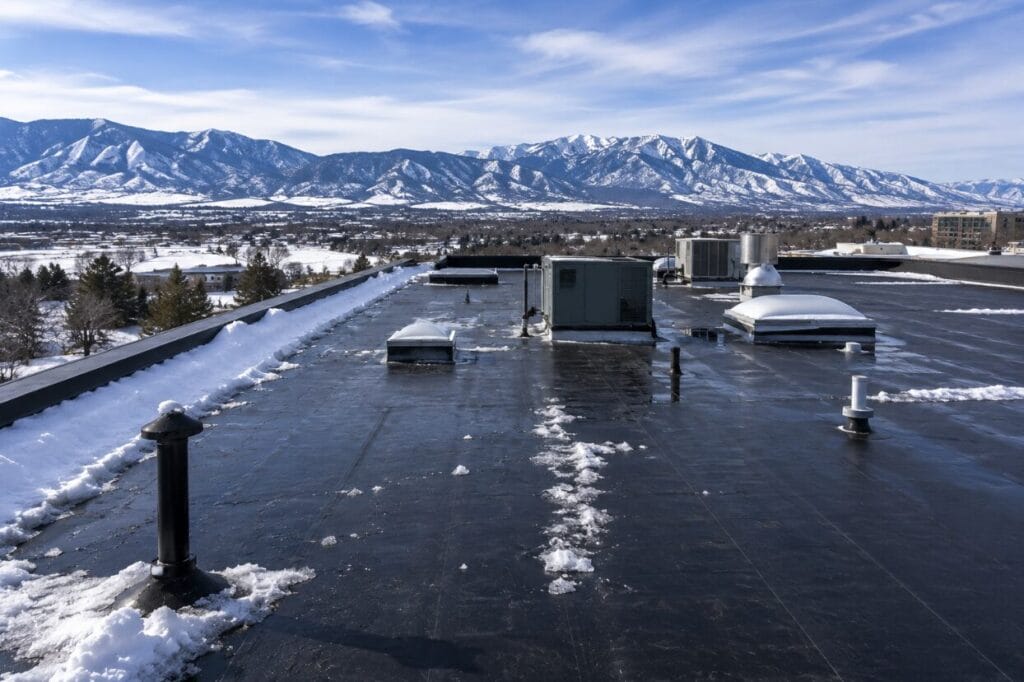
Colorado’s combination of intense sun, temperature swings, hail, and snow can be demanding on commercial roofing systems. EPDM has several characteristics that make it well-suited for these conditions, although there are a few tradeoffs to consider.
UV Exposure
Colorado’s higher elevations mean stronger UV exposure, which can accelerate the aging of some roofing materials. Black EPDM offers excellent resistance to UV and ozone exposure, making long-term weather resistance one of its biggest advantages in Colorado’s climate.
Freeze-Thaw Cycles
EPDM remains flexible in cold temperatures and can expand and contract as temperatures change. That flexibility is useful during Colorado’s frequent temperature swings and helps the membrane accommodate movement around flashings, seams, and roof edges without becoming brittle.
Hail
Hail is an important consideration for commercial roofs along Colorado’s Front Range. EPDM’s hail performance depends on the thickness of the membrane and the roofing assembly beneath it. Thicker membranes paired with a suitable cover board can provide greater impact resistance than thinner systems.
No roofing membrane is hail-proof, however, and severe storms can damage even a well-designed system. For buildings with greater hail exposure, membrane thickness and the complete roof assembly should be considered when specifying EPDM.
Snow and Drainage
The EPDM membrane itself does not support the weight of accumulated snow, since that load is carried by the building’s structure. For the roofing system, the bigger concern is what happens as the snow melts. Proper slope, clear drains, and well-installed flashing help move meltwater off the roof and prevent water from collecting in low areas.
Summer Heat Gain
Black EPDM absorbs more solar heat than a reflective roofing membrane, which can increase roof surface temperatures during Colorado’s sunny summers. For air-conditioned commercial buildings, that may contribute to higher cooling demands.
White EPDM and other reflective roofing options can help reduce heat absorption. In some cases, a reflective membrane such as TPO may also make more sense depending on the building and its energy goals. Our overview of commercial roofing trends explains how energy performance and other factors are influencing commercial roofing material choices.
EPDM vs. TPO: Choosing Between Them
EPDM and TPO are both widely used for commercial low-slope roofs, but each has advantages that make it better suited for certain buildings and priorities.
When EPDM May Be the Better Choice
EPDM may be a good fit when:
- Cold-weather flexibility is a priority
- Long-term UV resistance is important
- The building has limited cooling needs or is not heavily air-conditioned
- You prefer a roofing system with decades of proven performance
- Other roofs on the property already use EPDM and you want consistency
When TPO May Be the Better Choice
TPO may make more sense when:
- Reflectivity and reducing summer heat gain are priorities
- The building has significant cooling demands
- Heat-welded seams are preferred
- The roof is highly visible and appearance is a consideration
- Energy efficiency is an important part of the roofing decision
Our complete commercial TPO guide takes a closer look at TPO, including its installation, cost, lifespan, and performance.
Which Is Better for Colorado Buildings?
There isn’t one answer for every commercial property. TPO’s reflective surface can make it appealing for air-conditioned buildings where summer heat gain is a concern. EPDM remains a strong option for warehouses, unconditioned spaces, and buildings where cold-weather flexibility and long-term UV resistance are priorities.
The better choice ultimately depends on the building, roof design, budget, and performance priorities.
Is EPDM Right for Your Building?
Choosing the right commercial roofing system involves more than selecting a membrane. Insulation, cover board, attachment method, drainage, flashing, and installation quality all play an important role in how the finished roof performs and how long it lasts.
EPDM can be a strong option for many Colorado commercial buildings, but the right system depends on the condition of your existing roof, how the building is used, your budget, and the performance you need from the new roof.
At Roof Source, our commercial roofing team installs and services EPDM and other single-ply roofing systems throughout Colorado. We can evaluate your existing roof and recommend a system that makes sense for your building and budget.
Schedule a Commercial Roof Inspection Today!
Frequently Asked Questions
How long does an EPDM roof last?
A properly installed and maintained EPDM roof typically lasts 25 to 30 years. Membrane thickness, seam quality, drainage, and maintenance discipline are the biggest factors in whether a system reaches or exceeds that range.
Is EPDM the same as rubber roofing?
In commercial roofing, yes, “rubber roofing” almost always refers to EPDM. In residential contexts the term sometimes gets applied to modified bitumen or recycled-rubber shingle products, which are different materials. Always confirm the specific product.
How much does EPDM roofing cost?
Installed EPDM in Colorado generally runs about $4.50 to $10 per square foot depending on membrane thickness, attachment method, insulation requirements, and roof complexity. A detailed proposal after an inspection is the only reliable number.
What thickness EPDM should I use?
60 mil is the practical baseline for most Colorado commercial buildings. Buildings with regular rooftop traffic or high hail exposure should consider 90 mil. 45 mil is generally not recommended here.
Is EPDM better than TPO?
Neither is universally better. EPDM leads on cold flexibility, UV resistance, and field track record. TPO leads on reflectivity and energy performance, and offers heat-welded seams. The right choice depends on the building’s use, conditioning, and exposure.
Can EPDM be repaired?
Yes, and repairability is one of its strengths. Punctures and seam separations are patched with EPDM patch material and primer, and most commercial roofers are experienced with the process.
Does black EPDM increase cooling costs?
It can. Black EPDM absorbs solar heat rather than reflecting it, which adds cooling load in air-conditioned buildings. White EPDM or a reflective coating reduces the effect, as does choosing a reflective membrane instead.
Can EPDM be installed in cold weather?
Mechanically attached EPDM has a wider installation temperature window than fully adhered systems, since adhesives and seam tapes have minimum temperature requirements. Cold-weather installation is possible with the right products and procedures, but it needs to be planned rather than improvised.

Published on
August 18, 2026
There are no blocks availables