Insights
Slate Roof Cost, Pros & Cons: Is It Worth It?
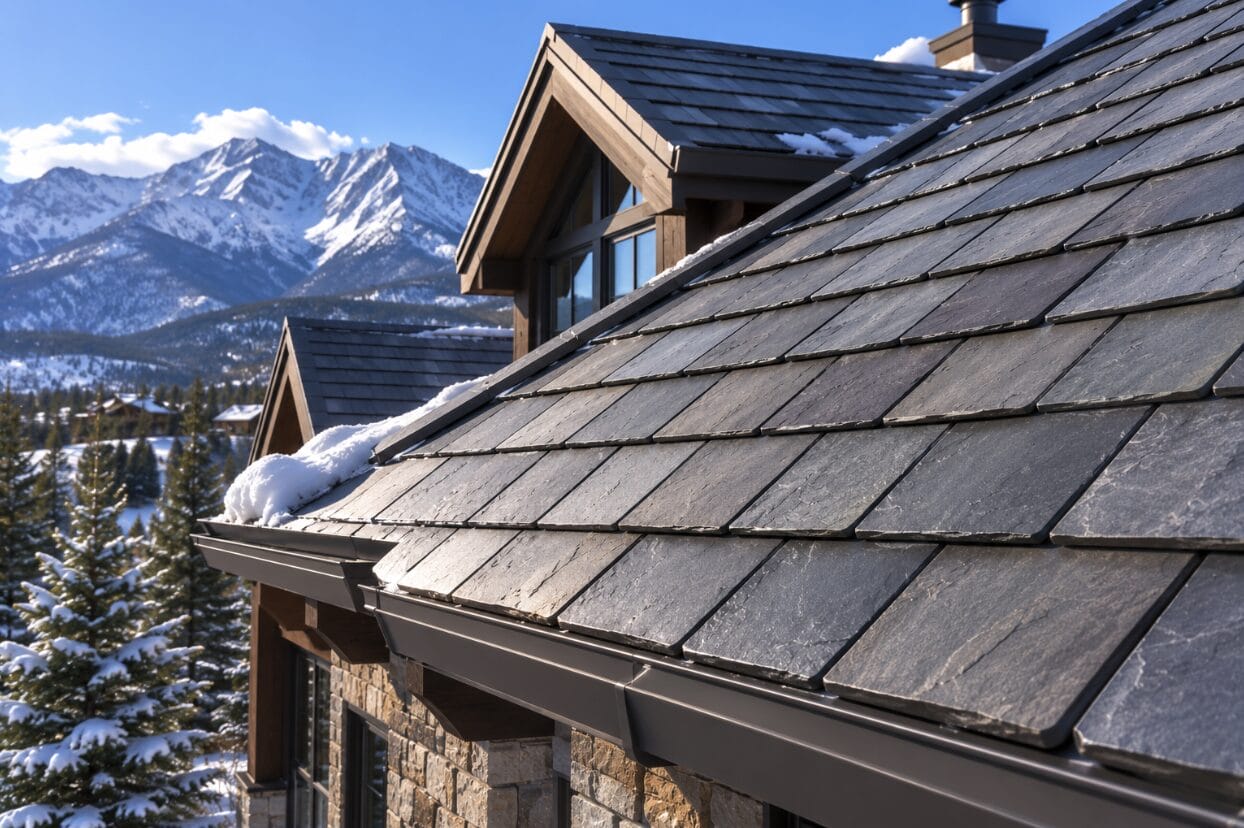
Slate is the longest-lasting roofing material available to homeowners. Not the longest-lasting shingle. Not the longest-lasting premium option. The longest-lasting, period. Some slate roofs installed in the 1800s are still in service today.
That durability comes with real tradeoffs: a high upfront cost, significant weight, and a small pool of contractors who can install and repair it correctly. And in Colorado, there’s a hail question that deserves a straight answer instead of a sales pitch.
This guide covers what slate actually is, what it costs installed, how synthetic slate compares, where each one makes sense, and how to think about slate on a Colorado home.
What Is Slate Roofing?
Natural slate is a metamorphic stone, formed when shale is subjected to heat and pressure over geologic time. It splits naturally into thin, flat sheets, a property called cleavage, which is what makes it usable as a roofing material with essentially no processing beyond quarrying and cutting.
Because it’s stone, slate doesn’t degrade the way manufactured roofing products do. It doesn’t absorb meaningful moisture, it’s non-combustible, and it doesn’t break down under UV exposure. A slate tile isn’t “weathering” toward failure the way an asphalt shingle is from the day it’s installed.
Grade and Lifespan
Quality varies by quarry. Slate is graded, and the grade drives lifespan. Hard slates, including Vermont, New York, and Virginia slates, commonly last 75 to 200 years. Softer slates, historically including some Pennsylvania sources, may last 50 to 125 years. Imported slate quality ranges widely, and the price advantage of lower-cost imports sometimes reflects a genuinely shorter service life. Ask specifically where the slate is quarried and what its expected service life is, not just what the warranty says.
Color and Thickness
Colors and appearance run through gray, black, green, purple, red, and mottled variegated blends, all natural stone colors that don’t fade. Thickness typically runs from 1/4 inch up to 1/2 inch or more for heavier architectural applications.
Natural Slate: The Pros
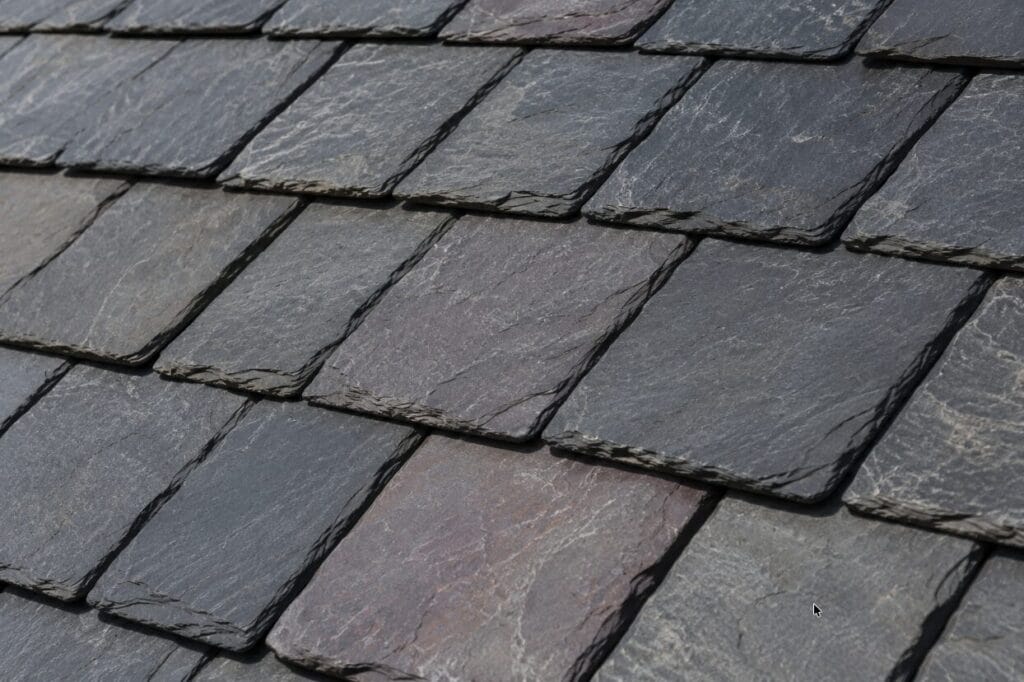
The tradeoffs are real, but so are the reasons people choose slate anyway.
Lifespan Measured in Generations
It’s realistically the last roof a house will need in a normal ownership lifetime, and often for the next several owners too.
Fireproof
Slate is non-combustible and carries a Class A fire rating. In Colorado’s wildland-urban interface areas, that’s not a minor feature. For homes in foothills and mountain communities, fire resistance can influence both safety and insurability.
Beauty That Doesn’t Degrade
Natural stone has depth and variation that manufactured products imitate but don’t reproduce. Colors don’t fade because they’re not pigments, they’re the stone itself.
No Rot, No Insects, No UV Breakdown
The failure modes that limit other materials mostly don’t apply.
Genuine Property Value
On architecturally appropriate homes, slate is a recognized premium feature. It’s one of the few roofing choices that reads as an asset rather than a maintenance item.
Environmentally Sound
A natural material with minimal processing, extremely long service life, and no landfill cycle every 20 years.
Natural Slate: The Cons
None of that comes cheap or easy, and here’s where the tradeoffs get specific.
Cost
Slate is among the most expensive roofing materials available, both in material and in labor. There’s no way around this.
Weight
Natural slate runs roughly 800 to 1,500 pounds per square (100 square feet), compared with about 250 to 400 pounds per square for architectural asphalt shingles. That’s three to five times the load. Many homes not originally built for slate require structural reinforcement, which means a structural engineer’s evaluation before anything else. This is the single most common reason a slate project doesn’t proceed.
Installer Scarcity
Slate installation is a specialized craft. Fasteners must be set to allow the slate to hang rather than be clamped, headlap and exposure must be correct, and flashing details in copper or comparable long-life metal must be executed to match the roof’s lifespan. A crew that installs slate like heavy shingles will produce a roof that fails early and expensively. Repairs require the same skill set, which means you need access to that expertise for decades, not just at installation.
Fragility Underfoot
Slate is strong but brittle. It cracks under point loads, which means anyone walking the roof, including HVAC technicians, satellite installers, and holiday light crews, can damage it. Roofs with rooftop equipment access need planning.
Hail
This is the Colorado question. Slate resists small hail well. Large hail, in the 1.5 to 2 inch range and above that Front Range storms produce with some regularity, can crack slate tiles. The damage is usually localized rather than systemic, and individual tiles can be replaced, but repairs require a slate-competent contractor and matching material. Some insurers treat slate differently for both premiums and claims. Talk to your carrier before committing.
Long Lead Times
Quarried natural stone in a specific color and grade isn’t a stocked item. Plan for procurement time.
Synthetic Slate: The Alternative
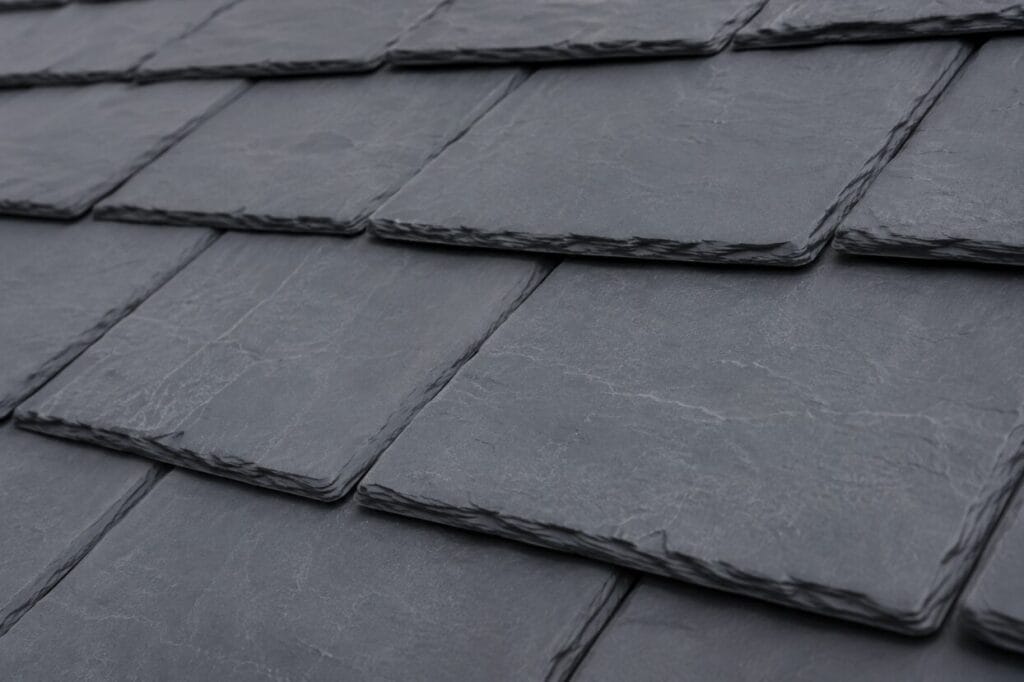
Synthetic slate is a manufactured tile, typically engineered polymer or rubber composite, often with recycled content, molded from real slate to reproduce its texture and shape. Better products are convincing from the ground and reasonably convincing up close.
Here’s how it stacks up against the real thing.
Advantages Over Natural Slate
- Weight. Roughly 250 to 500 pounds per square, comparable to a heavy asphalt shingle. Most homes need no structural reinforcement, which removes the biggest barrier to slate-look roofing.
- Cost. Materially less than natural slate, both in material and in labor, since installation is closer to conventional roofing practice.
- Impact resistance. Many synthetic slate products carry a UL 2218 Class 4 impact rating, the highest classification, which is meaningful in a hail climate and often qualifies for insurance premium discounts in Colorado.
- Consistency. Uniform thickness and dimension, no quarry variation, no brittle-tile breakage during installation.
- Wider installer pool. More contractors can install it correctly.
- Walkability. More forgiving of foot traffic than natural stone.
Disadvantages
- Lifespan. Typically 40 to 50 years with warranties commonly in the 30 to 50 year range. Long, but not natural slate’s 100-plus.
- It’s a manufactured product. UV exposure, thermal cycling, and time affect polymers in ways they don’t affect stone. High-altitude UV is a real stress on any polymer product, so product selection and manufacturer track record matter.
- Appearance. Good products look good. Cheap products look like plastic, and repeating mold patterns become visible on large roof planes.
- Not authentic on a historic home. For a genuine period restoration, synthetic may not be acceptable to a historic district review board.
Slate Roof Cost
Slate is priced by the square (100 square feet of roof surface). Installed pricing for a Colorado home typically falls in these ranges:
- Natural slate: $15 to $30+ per square foot installed, with a 75 to 200 year lifespan
- Synthetic slate: $9 to $16 per square foot installed, with a 40 to 50 year lifespan
- Architectural asphalt shingle (for comparison): $4.50 to $8 per square foot installed, with a 20 to 30 year lifespan
Ranges are broad because slate cost is driven heavily by project specifics. For a 2,500 square foot roof, natural slate can realistically run from the high five figures into six figures, while synthetic slate typically lands well below that.
What Drives Natural Slate Cost Up
- Slate grade, thickness, and quarry origin
- Structural reinforcement, if the framing can’t carry the load
- Roof pitch and complexity, since steep and cut-up roofs demand far more labor
- Copper flashing, valleys, and snow retention systems, which are standard practice on slate because they need to last as long as the slate does
- Full tear-off and disposal of the existing roof
- Regional installer availability
If you want a baseline for comparison, our breakdown of how much a new roof costs in Colorado covers the more common material tiers.
Cost Per Year of Service
Slate advocates point out that $25 per square foot over 100 years is a lower annual cost than $6 per square foot over 25 years. Mathematically that’s true. Practically, it depends on how long you’ll hold the home and whether resale value captures the remaining service life. For a family home intended for generations, or a historically significant property, the math is compelling. For a house you expect to sell within a decade, it usually isn’t.
Slate in Colorado: What to Consider
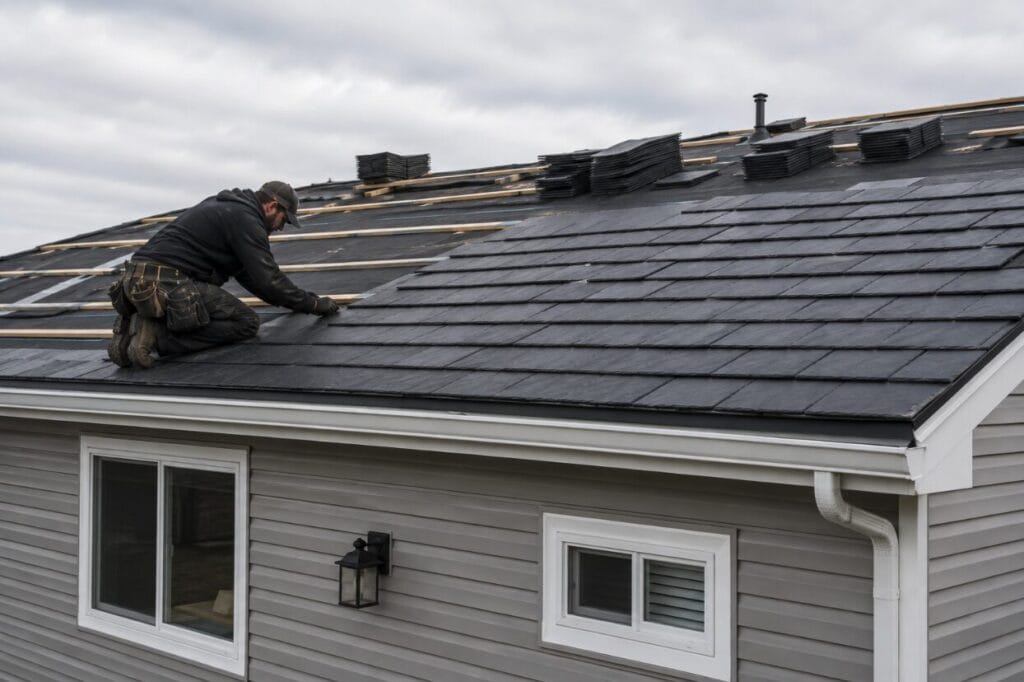
The material tradeoffs above play out differently once you factor in Colorado’s specific conditions.
Structural Capacity Comes First
Before anything else, a structural engineer needs to confirm your framing can carry natural slate plus Colorado’s design snow load. Roof structure and snow load are evaluated together, and a home in a higher-elevation jurisdiction with a substantial ground snow load requirement has less spare capacity for a heavy roof covering. If reinforcement is required, that cost belongs in your comparison from the start.
Hail Exposure and Insurance
This is where synthetic slate often wins in Colorado on practical grounds. A Class 4 impact-rated synthetic product can qualify for insurance discounts, while natural slate may require conversations with your carrier about coverage terms and deductibles for impact damage. If you’re in a high-hail corridor and hail claims are a recurring reality, that difference is worth quantifying with your agent. Our guide to navigating a roof insurance claim in Colorado covers how the process typically works.
Snow Retention
Slate is a smooth, hard surface, and snow slides off it readily. On mountain and foothills properties, snow guards and retention systems aren’t optional accessories, they’re part of the design, protecting gutters, landscaping, walkways, and anyone standing below.
High-Altitude UV
Favors natural slate, which is unaffected by UV, and makes product selection more consequential for synthetic slate. Ask about UV stabilization and about field performance at elevation, not just lab testing.
Freeze-Thaw
Quality hard slate has very low water absorption and handles freeze-thaw cycling well. Softer, more porous slate does not, and this is a genuine reason grade matters in a Colorado climate rather than just a spec-sheet detail.
Contractor Competence
Confirm slate-specific experience with real references and completed projects you can look at. This is not a material to learn on. Our list of questions to ask a roofing contractor is a useful starting point, and for slate you should add specific questions about headlap, fastening method, flashing metal, and who will handle repairs in ten years.
Is Slate Right for Your Home?
The pros, cons, and cost breakdown point toward different answers depending on your situation.
Natural Slate Makes Sense When
You own a historic or architecturally significant home, your structure can carry the load or reinforcement is feasible, you’re planning for multi-generational ownership, fire resistance is a priority, and the budget supports doing it properly with copper flashing and snow retention.
Synthetic Slate Makes Sense When
You want the appearance without structural reinforcement, hail impact resistance and insurance considerations are priorities, budget matters but you want something well above standard shingles, and a 40 to 50 year service life meets your planning horizon.
Neither Makes Sense When
The aesthetic isn’t a priority for your home’s architecture and a quality architectural shingle or standing seam metal roof would serve you better for less. There’s no obligation to buy the most expensive roof, and the best roofing material for a Colorado home depends on your building, your exposure, and how long you plan to stay.
Talk Through Slate with Roof Source
Slate is a significant decision with structural, insurance, and long-term maintenance implications. At Roof Source, we’ll give you a straight assessment of whether your home can support natural slate, how synthetic slate compares for your situation, and what each option realistically costs.
Schedule a Free Roof Consultation Today!
Frequently Asked Questions
How long does a slate roof last?
Quality natural hard slate typically lasts 75 to 200 years depending on grade and quarry, and installations from the 1800s remain in service. Synthetic slate typically lasts 40 to 50 years, with warranties commonly in the 30 to 50 year range.
How much does a slate roof cost?
Natural slate typically runs $15 to $30 or more per square foot installed in Colorado, while synthetic slate generally runs $9 to $16. Structural reinforcement, roof complexity, and copper flashing can push natural slate considerably higher.
Is synthetic slate as good as real slate?
It depends on your priorities. Synthetic slate is lighter, less expensive, more impact-resistant, and easier to install, but it lasts roughly half as long and is a manufactured polymer rather than natural stone. For hail resistance and structural practicality in Colorado, synthetic often has the edge; for authenticity and multi-generational lifespan, natural slate does.
Can my house support a slate roof?
Natural slate weighs three to five times what asphalt shingles weigh, so a structural engineer must evaluate your framing before proceeding. Many homes require reinforcement. Synthetic slate weighs about the same as a heavy shingle and typically needs no structural work.
Does slate hold up to Colorado hail?
Slate resists small hail well, but large hail can crack tiles. Damage is usually localized and individual tiles can be replaced by a slate-competent contractor. Many synthetic slate products carry a UL 2218 Class 4 impact rating, the highest available, which is a meaningful advantage in high-hail areas.
Can you walk on a slate roof?
Not casually. Slate is brittle and cracks under point loads. Anyone accessing the roof should be experienced with slate and use proper techniques. Plan access routes if you have rooftop equipment that needs servicing.
Do slate roofs need maintenance?
Less than most roofs, but not none. Annual inspection, replacement of any cracked or slipped tiles, keeping valleys and gutters clear, and monitoring flashing condition are the essentials. Flashings, which are typically copper on a slate roof, usually need attention before the slate does.
Will a slate roof lower my insurance premium?
Not necessarily. Fire resistance can help, but impact resistance drives more of the discount in Colorado, and natural slate isn’t impact-rated the way Class 4 products are. Class 4 rated synthetic slate is more likely to qualify for a premium discount. Confirm specifics with your carrier before you decide.

Published on
August 27, 2026
There are no blocks availables