Insights
Storm Damage Roof Repair in Colorado: What to Do After Hail or Wind Hits
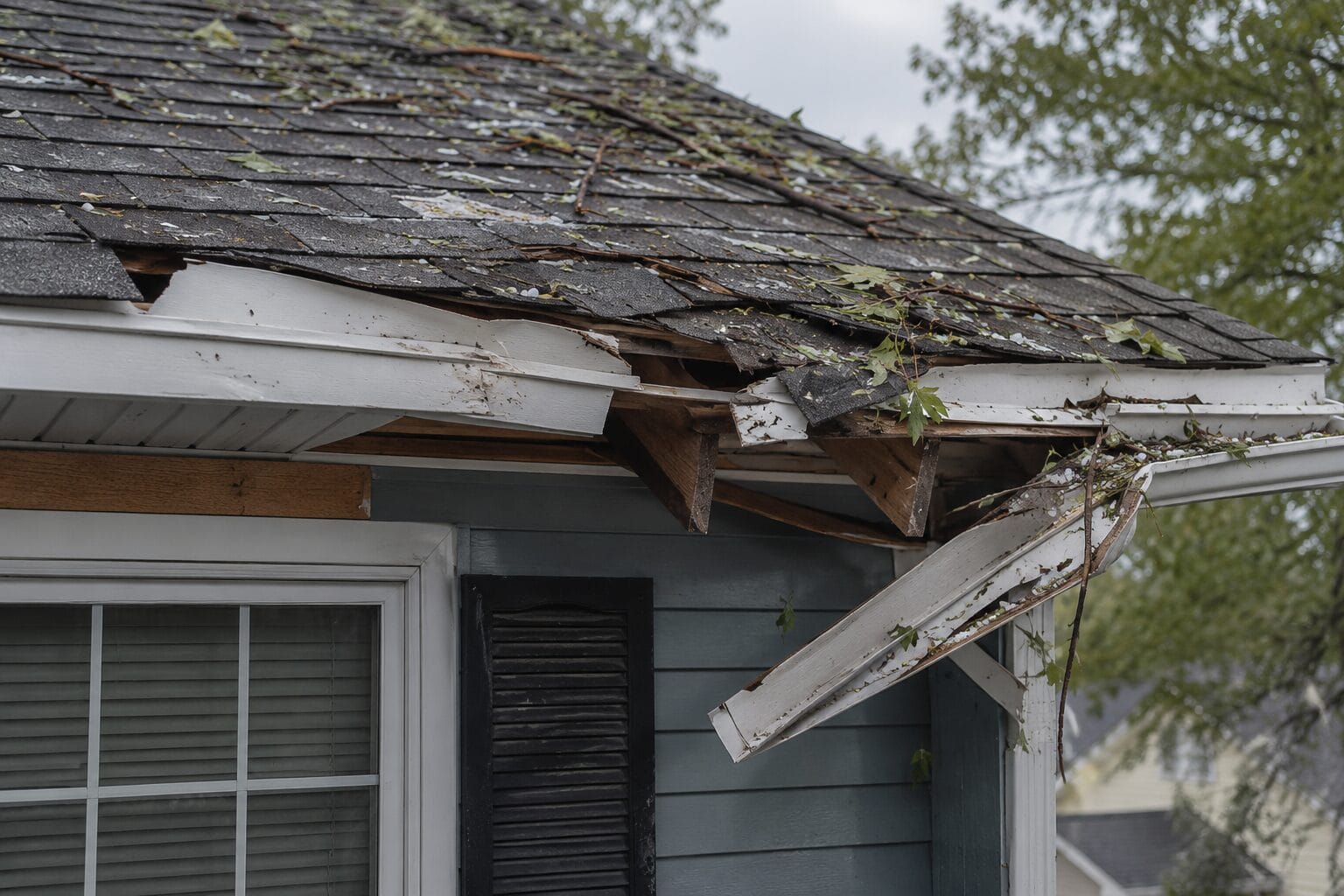
Colorado doesn’t give its roofs a break. Between spring hailstorms that roll through the Front Range with little warning, summer afternoon winds that can hit 60 to 80 mph, and occasional late-season snowstorms that drop wet heavy snow on roofs not yet ready for winter, storm damage is a reality that most Colorado homeowners will deal with at some point.
The good news is that storm damage doesn’t have to become a major disaster if you respond to it the right way. Knowing what to look for, what to do immediately after a storm, and how to navigate the repair and insurance process can save you significant money and headache.
This guide walks you through all of it.
Colorado’s Storm Landscape: Why Your Roof Is at Risk
Colorado sits in the heart of what insurers sometimes call “Hail Alley,” a corridor stretching from Texas north through Kansas, Nebraska, and into Colorado where hail frequency is among the highest in the country. NOAA’s severe weather data consistently ranks Colorado among the top states for hail events annually. The Denver metro area and Front Range communities from Castle Rock to Fort Collins see repeated significant hail events every year, with some seasons producing multiple storms capable of damaging roofs across wide areas.
Wind damage is equally common. Colorado’s proximity to the mountains creates conditions for rapid weather shifts, downslope wind events, and sustained high winds that can lift or strip shingles, damage flashing, and tear away gutters and downspouts.
What makes Colorado’s storm damage particularly important to address promptly is the altitude and UV exposure. A compromised roof that might hold up for a season in a milder climate can fail faster here because the sun is more intense, temperature swings are more extreme, and snowmelt infiltration during winter can accelerate water damage in ways that don’t happen at lower elevations.
How to Spot Storm Damage on Your Roof
One of the trickiest aspects of storm damage, hail damage in particular, is that it’s often not obvious from the ground. A storm can significantly compromise your roof without leaving visible signs that are easy to spot from street level.
Signs of Hail Damage
There are things you can check yourself after any significant storm.
On the roof (if you can safely observe from a ladder or a low slope area):
- Dark circular or irregular impact marks on shingles, often described as a “bruised” appearance
- Granules knocked loose, leaving bare spots in the shingle surface
- Cracked or split shingles where the impact penetrated the surface
- Dents or dings on metal flashing, ridge caps, or pipe boots
From the ground:
- Excessive granule accumulation in gutters or at downspout discharge points
- Dented gutters, downspouts, or aluminum trim around windows and doors (a reliable indicator that hail was significant enough to damage the roof)
- Dented AC units or metal vents on the roof surface
Inside the home:
- Water stains on ceilings or walls
- Soft or discolored spots in the attic
Signs of Wind Damage
Wind damage tends to be more visible than hail damage:
- Missing shingles, either completely absent or partially lifted and curled
- Shingle debris in the yard or on neighboring properties
- Lifted or displaced flashing around chimneys, skylights, or roof edges
- Damaged or detached gutters
- Fallen or displaced ridge cap shingles along the peak of the roof
If you find any of these signs after a storm, the next step is a professional inspection, not a DIY repair attempt.
What to Do Immediately After a Storm
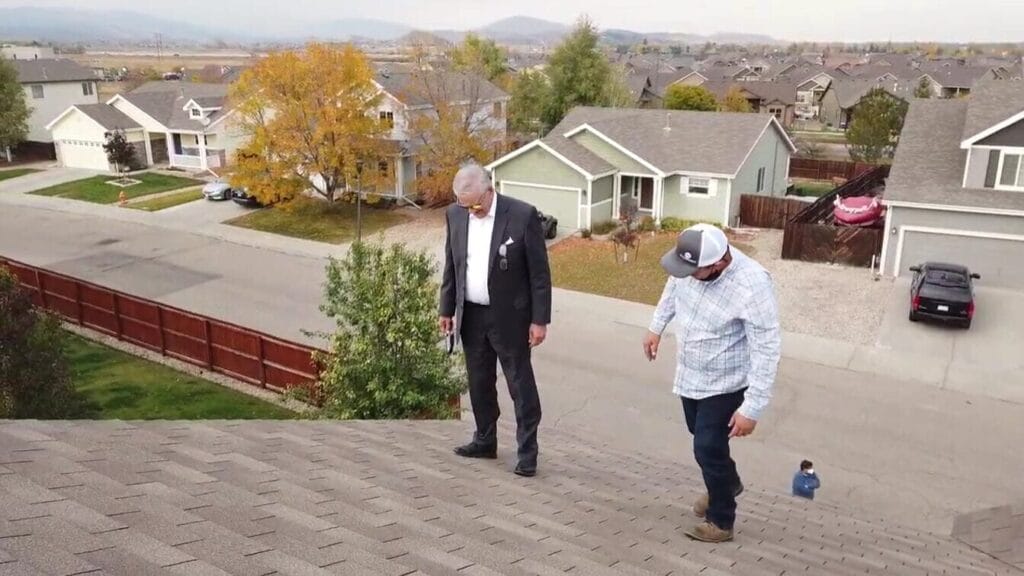
Acting quickly after storm damage limits the exposure your home has to further water intrusion and positions you better for an insurance claim.
Step 1: Document Everything Before Touching Anything
Grab your phone and photograph everything you can see from ground level. Photograph the roof surface from multiple angles, the gutters, the downspouts, any dented metal trim, and anything on the ground that was displaced during the storm. If there’s active water intrusion inside the home, photograph that too.
Timestamped photos taken immediately after a storm establish a clear connection between the weather event and the damage. This matters for insurance claims and can prevent disputes about when damage occurred.
Step 2: Protect Your Home from Further Damage
If there’s active water intrusion or visibly missing shingles creating an open roof surface, temporary protection is necessary while you arrange for professional inspection and repair. A professionally installed roof tarp over the affected area prevents additional water from entering until repairs can be completed.
Do not attempt to get on your roof yourself. Wet roofs are extremely slippery, and hail damage to shingles can create fragile surface conditions that aren’t obvious until you’re standing on them. Leave tarping and any temporary protective measures to a licensed professional.
Step 3: Call a Local Roofing Contractor
Schedule a professional inspection with a licensed, local roofing contractor as soon as possible after a significant storm. A professional inspection will identify damage that isn’t visible from the ground, document findings with photographs, and give you a clear picture of what repairs are needed before you contact your insurance company.
After major regional hail events in Colorado, roofing contractors fill up quickly. Getting on a schedule early positions you for faster service and gives you more time to navigate the insurance process without feeling rushed.
Step 4: Contact Your Insurance Company
Once you have a professional inspection report in hand, contact your homeowner’s insurance company to report the damage and initiate a claim. Having a contractor’s documentation before the adjuster visits gives you a solid baseline for comparison and ensures nothing gets overlooked during the adjuster’s assessment.
Most Colorado homeowner’s policies cover sudden storm damage from hail and wind. Your policy will specify your deductible, coverage type (replacement cost value or actual cash value), and any specific exclusions. If you haven’t reviewed your policy recently, now is a good time to pull it out. The Colorado Division of Insurance is also a helpful resource for understanding your rights as a policyholder and what insurers are required to cover under state law.
Understanding Hail Damage Repair
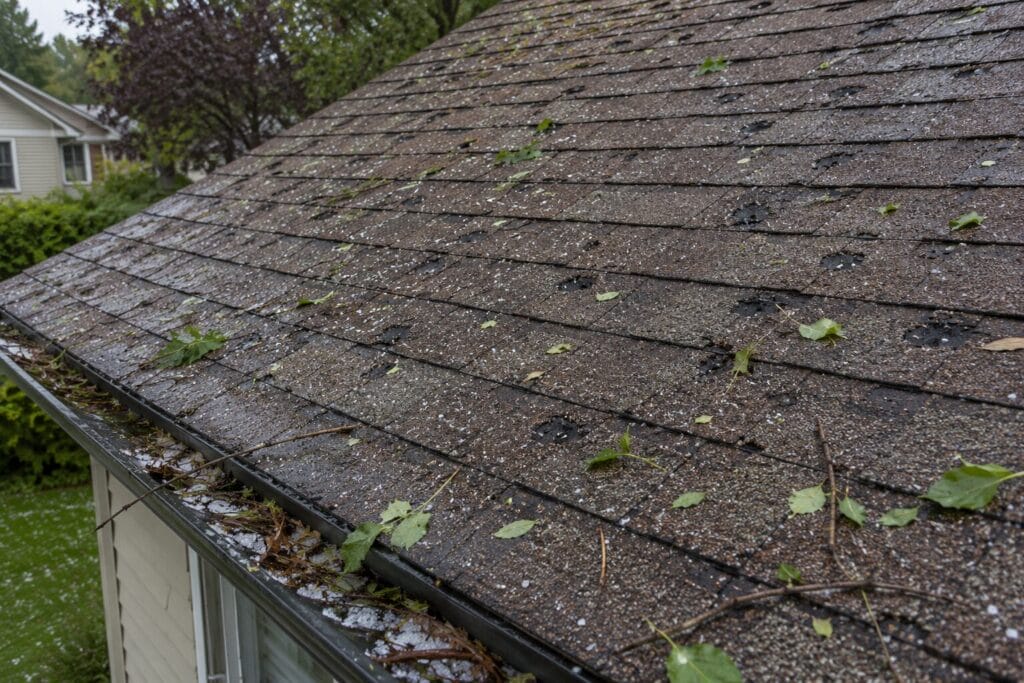
Not all hail damage requires full roof replacement. The scope of repair depends on the size and speed of the hailstones, the age and condition of the existing roofing material, and how widespread the damage is across the roof surface.
Localized damage to a limited section of the roof may be addressable with targeted shingle replacement. This is most viable when the roof is relatively new, the existing shingles are in otherwise good condition, and a matching product is available.
Widespread damage across the majority of the roof surface, which is common after significant hail events, typically warrants full replacement. This is especially true for older roofs where granule loss from hail accelerates deterioration of already-aged shingles. In these cases, insurance often covers full replacement depending on your policy type.
A few things that are easy to miss during a casual assessment but matter for hail damage repair:
Flashing damage. Metal flashing around chimneys, skylights, pipes, and roof edges takes direct hail impacts and can be dented, cracked, or displaced. Damaged flashing is a primary source of roof leaks and needs to be part of any repair scope.
Pipe boots. Rubber pipe boots around roof penetrations can be cracked by large hail impacts, creating leak pathways even when the surrounding shingles look intact.
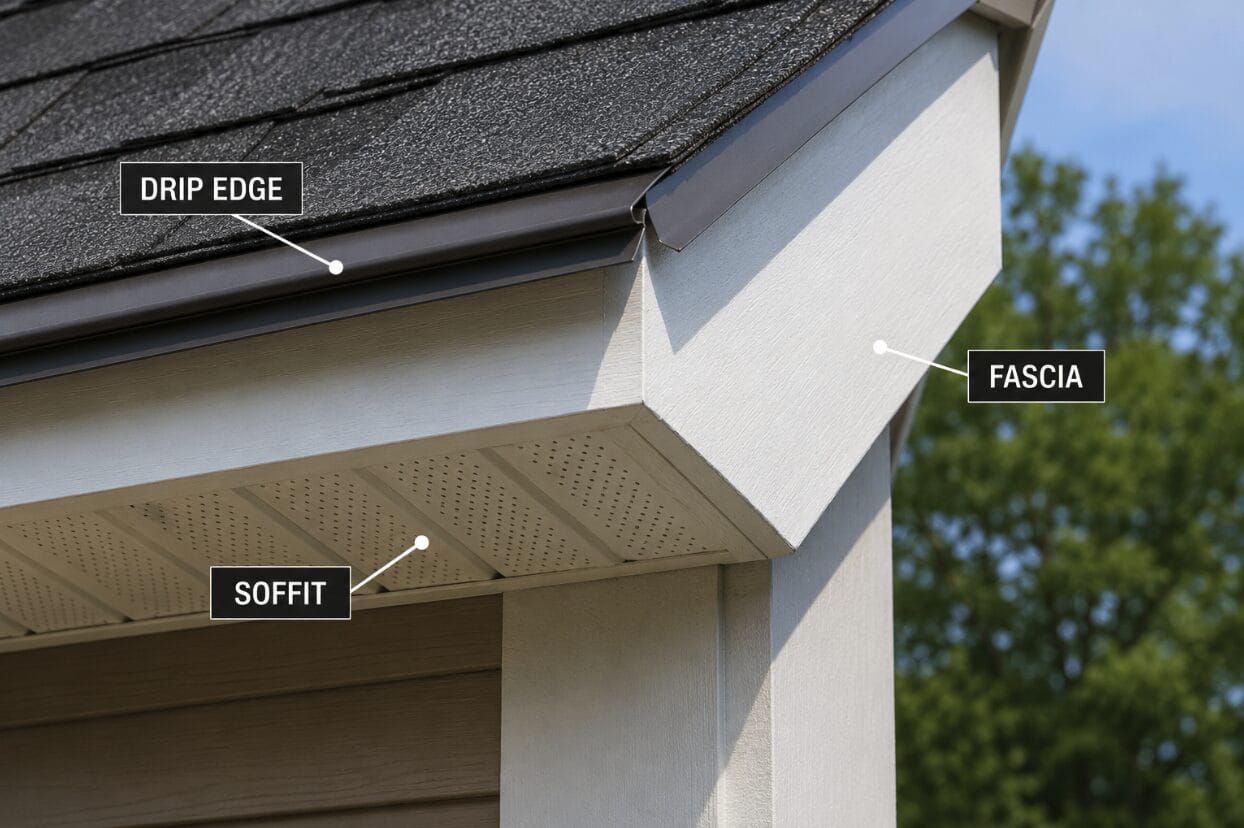
Gutters and downspouts. Dented gutters compromise drainage and can pull away from the fascia over time. If your gutters show clear hail impact marks, include them in your damage documentation.
Understanding Wind Damage Roof Repair
Wind damage roof repair typically focuses on the areas most susceptible to lift and blow-off: the roof perimeter, ridge, and any areas where shingles may have been improperly installed or had aged sealant strips.
Missing shingles create immediate vulnerability to water intrusion and need to be replaced promptly. The challenge with missing shingles on an older roof is finding a matching product. Shingle lines are discontinued over time, and a visible mismatch can affect curb appeal and resale value.
Lifted or creased shingles that haven’t blown off may or may not seal back down depending on the extent of the distortion. A contractor can assess whether re-sealing is viable or replacement is necessary.
Flashing displacement at roof edges, parapets, or around penetrations is common in high-wind events and needs to be secured and re-sealed properly. Improperly reinstalled flashing is a frequent source of post-storm leaks that don’t become apparent until the next rain.
Navigating the Insurance Claims Process
If your storm damage inspection indicates significant damage, filing an insurance claim is the next step. Here’s how to move through the process effectively.
Don’t skip the professional inspection before calling your insurer.
A contractor’s documented assessment gives you a baseline. If the adjuster’s estimate comes in lower than expected, you have documentation to support a supplemental claim.
Be present during the adjuster’s inspection.
If your contractor is available to walk the roof with the adjuster, that’s even better. Items that get missed during the adjuster’s visit are harder to recover after the fact.
Review the settlement offer carefully.
Check that all damage is addressed, including flashing, gutters, pipe boots, and any other components beyond the shingles themselves. Initial estimates from adjusters frequently omit items, not always intentionally, but the result is the same.
Know your deductible.
Colorado policies often carry a separate wind and hail deductible that can be higher than the standard all-perils deductible and in some cases is calculated as a percentage of your home’s insured value rather than a flat dollar amount.
Collect your recoverable depreciation.
If you have Replacement Cost Value coverage, your insurer will withhold a portion of the payout until repairs are completed and you submit the final invoice. Don’t leave that money on the table.
If you’re dealing with storm damage and need professional support through the claims process, our storm damage roof repair service is a good place to start.
Choosing a Contractor for Storm Damage Repair
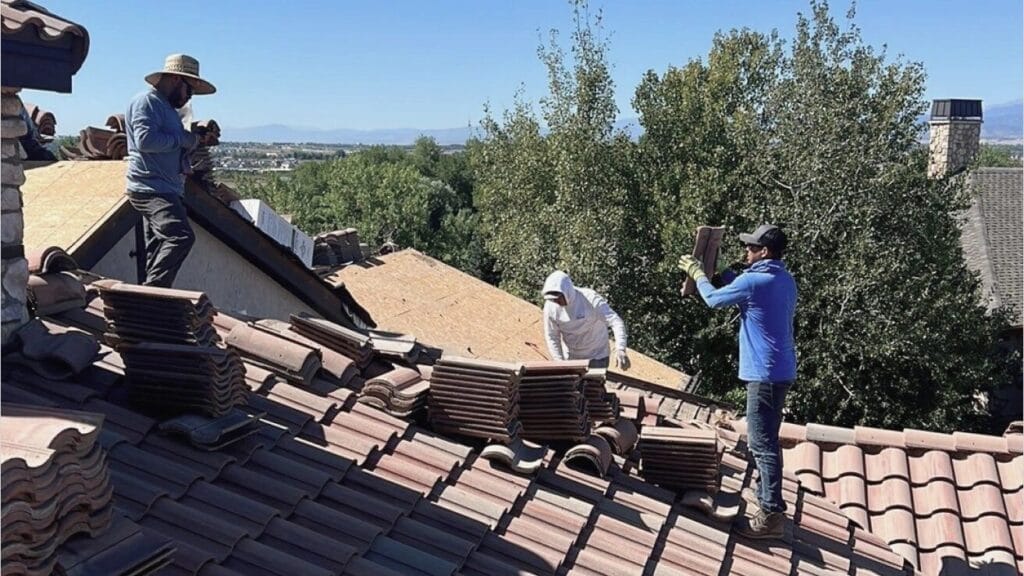
After a significant hail event, out-of-town contractors descend on affected areas in large numbers. Some are legitimate. Many are not. The phenomenon is well-documented in Colorado and should be approached with caution.
The risks of hiring an out-of-area storm chaser include poor workmanship, difficulty reaching them for warranty issues, improper insurance claims practices, and in some cases outright fraud. Contractors who pressure you to sign contracts quickly, offer to waive your deductible, or can’t provide a local address and verifiable references are ones to avoid.
What to look for instead:
- Licensed in the specific Colorado jurisdiction where your home is located
- Current certificates of general liability and workers’ compensation insurance
- Local presence and verifiable history of completed work in your area
- References from recent projects you can actually call
- A detailed written proposal before any work begins
- Willingness to coordinate with your insurance adjuster
An established local contractor has a reputation to protect. They’ll be accountable after the work is done in a way that a contractor passing through after a storm simply won’t be.
After the Repair: Protecting Against the Next Storm
Storm damage repairs are also an opportunity to upgrade your roof’s resilience for future events. If you’re doing a full replacement following significant hail damage, consider:
Class 4 Impact-Resistant Shingles
Rated under the UL 2218 standard, Class 4 shingles are engineered to withstand 2-inch hailstone impacts without cracking. In Colorado, many insurance carriers offer premium discounts of 20 to 30 percent for homes with Class 4 shingles, which can help offset the modest cost premium over standard architectural shingles.
Higher-quality Underlayment
The underlayment beneath your shingles is the secondary line of defense if shingles are compromised. A synthetic or reinforced underlayment provides better protection than standard felt.
Proper Flashing and Sealant Details
Ensuring all penetrations, transitions, and perimeter edges are properly detailed and sealed during the replacement significantly reduces the vulnerability of the new roof to future water intrusion.
Don’t Wait on Storm Damage
Storm damage that goes unaddressed doesn’t stay contained. A few cracked shingles or a displaced piece of flashing can allow water to reach your roof deck, insulation, and eventually your interior finishes over a single wet season. What might have been a straightforward repair becomes a significantly more expensive project.
At Roof Source, our team responds to storm damage across Colorado with professional inspections, detailed damage documentation, and quality repair and replacement work. We work directly with insurance adjusters and help homeowners navigate the claims process from start to finish.
Schedule Your Storm Damage Inspection Today!
Frequently Asked Questions
How do I know if my roof has hail damage?
Hail damage signs include impact marks or bruising on shingles, excessive granule accumulation in gutters, dented gutters and metal trim, cracked or split shingles, and damaged flashing. Because hail damage isn’t always visible from the ground, a professional inspection after any significant storm is the most reliable way to assess your roof’s condition.
Does homeowner’s insurance cover hail damage in Colorado?
Most standard homeowner’s insurance policies in Colorado cover sudden storm damage from hail and wind. Coverage details, deductible amounts, and payout calculations vary by policy. Many Colorado policies carry a separate wind and hail deductible that may be higher than the standard all-perils deductible. Review your policy and contact your insurer after any significant storm to understand your coverage.
How long do I have to file a claim for storm damage in Colorado?
Most policies allow one year from the date of the storm event to file a claim, though this varies by carrier. After major regional events, some insurers extend this window. It’s best to initiate the process promptly rather than waiting, both to protect your coverage rights and to get repairs scheduled before contractor availability tightens.
Should I repair or replace my roof after hail damage?
It depends on the extent of the damage, the age of the roof, and how widespread the impact is across the roof surface. Localized damage to a newer roof in otherwise good condition may be repairable. Widespread damage or damage to an aging roof typically warrants full replacement. A professional inspection will give you the clearest picture of which approach makes sense for your specific situation.
What is wind damage roof repair?
Wind damage roof repair addresses shingles that have been lifted, creased, or blown off, flashing that has been displaced or loosened, and any structural damage caused by falling debris or sustained wind pressure. The scope of repair ranges from targeted shingle replacement for isolated damage to full replacement when widespread lifting or blow-off has occurred.
How do I avoid storm chaser contractors after a hail event?
Stick with locally established, licensed contractors who have a verifiable history of work in your area. Ask for references from recent local projects, request proof of licensing and insurance before any work begins, and be cautious of contractors who pressure you to sign quickly or offer to waive your deductible. Taking a day or two to vet contractors properly is almost always worth it.

Published on
May 1, 2026
There are no blocks availables